Taiwan Semiconductor (TSM) Raises Dividend 15.9% to $1.107
Taiwan Semiconductor (TSM) lifted its quarterly dividend 15.9% to $1.107 per ADS, pairing a 0.91% forward yield with a B safety grade after record results.
 TSM — Taiwan Semiconductor Manufacturing Company Limited
Key takeaways
- TSM raised its quarterly dividend 15.9% to $1.107 per share from $0.955.
- The annual dividend is $4.07 per share, and 100 shares produce $407.00 in annual income.
- The dividend uses 26% of earnings and earns a safety score of 68 with a B grade.
- TSM yields 0.91%, compared with a 0.99% semiconductor industry median, and the next ex-dividend date is December 10, 2026.
Taiwan Semiconductor Manufacturing Company raised its quarterly dividend on the New York-listed shares to $1.107 per share from $0.955, an increase of 15.9%. The shares traded ex-dividend on September 16, 2026, and the next ex-dividend date is December 10, 2026.
Why the dividend changed
The increase extends TSMC’s established capital-return policy. Management said in its latest earnings call that it remained committed to a “sustainable and steadily increasing cash dividend per share” even as the company accelerates spending on new manufacturing capacity. The declaration covers a cash dividend, with no stock dividend, split, merger or spin-off cited as an explanation for the change. TSMC’s dividend notice provides the terms for the U.S.-listed depositary shares.
The business context was unusually strong. TSMC reported second-quarter revenue of $40.20 billion, at the top of its guidance, with a gross margin of 67.7% and an operating margin of 60.3%. It guided for third-quarter revenue of $44.6 billion to $45.8 billion, while its gross-margin range was 65.0% to 67.0%. Those figures show that the company entered the dividend decision with substantial profitability despite the cost of expanding its manufacturing network. TSMC’s second-quarter results contain the reported results and guidance.
Demand for advanced chips used in artificial intelligence systems is driving both earnings and investment. TSMC raised its full-year capital budget to between $60 billion and $64 billion, saying structural demand from customers, including the emerging agentic AI market, required additional capacity. Reuters reported that second-quarter profit reached a record and that management raised its full-year revenue outlook, while also committing more capital to Arizona. TSMC’s earnings-call transcript and Reuters’ results coverage show why the board had room to increase the distribution while retaining most earnings for expansion.
Dividend track record
The recent payment sequence shows a clear upward trend, though not a perfectly smooth one in U.S. dollars. Payments advanced from $0.616 in December 2024 to $0.684 in March 2025, $0.78 in June, $0.822 in September and $0.835 in December. They then reached $0.956 in March 2026, eased to $0.955 in June and rose to $1.107 in September.
Full-year totals tell a similar story over a longer period. TSM paid $1.71 per share in 2020 and $1.89 in 2021, a rise of 10.9%. The annual amount fell 1.9% to $1.86 in 2022 and fell another 0.5% to $1.85 in 2023. Growth then resumed, with the total rising 26.7% to $2.34 in 2024 and 33.4% to $3.12 in 2025. The five-year rate is 13.6% annual growth.
The U.S.-dollar series has a two-year dividend-growth streak, and 2022 is identified as the last annual cut year. That record differs from TSMC’s statement that it has never reduced the dividend per common share. The distinction reflects the security and currency involved: TSMC declares its common-share dividend in Taiwan dollars and presents the U.S. ADS amount as an approximate dollar translation. Exchange-rate movements can therefore interrupt the dollar payment trend without a reduction in the underlying Taiwan-dollar rate. TSMC’s investor site states the company’s common-share policy, while its dividend notice shows the Taiwan-dollar declaration and approximate U.S.-dollar ADS amount.
Is the dividend covered?
The dividend consumes 26% of earnings. That leaves most reported profit inside the company for fabrication plants, advanced process development and other corporate needs. It also provides a meaningful earnings buffer if the semiconductor cycle weakens or overseas manufacturing costs rise.
SmarterDividends assigns the dividend a safety score of 68 and a B grade, meaning safe within the 66-79 range. The assessment indicates sound current coverage rather than an unconditional guarantee. TSMC is simultaneously funding an unusually large capital program, while the semiconductor business remains exposed to demand cycles, execution costs and geopolitical risks.
Yield and valuation
TSM’s forward yield is 0.91%. That is below the Technology sector median of 1.38% and slightly below the semiconductor industry median of 0.99%. The figures place TSM closer to a low-yield growth distribution than a high-current-income semiconductor payout.
The shares trade at $451.97 after a 44.7% one-year gain. SmarterDividends estimates fair value at $472.56, corresponding to 9% upside, and classifies the valuation as fair. The valuation and yield together show that recent share-price appreciation has limited the income rate even as the dividend has grown.
How TSMC compares with peers
TSM’s 0.91% forward yield is higher than NVIDIA’s 0.44%, Broadcom’s 0.73% and Micron’s 0.05%, but below Texas Instruments’ 2.23%. It also trails the semiconductor industry median of 0.99%. The comparison shows that TSM’s yield is relatively substantial among several AI-linked semiconductor companies, though it remains well below the level offered by Texas Instruments.
The payout ratios differ sharply. TSM distributes 26% of earnings, compared with 4% at NVIDIA, 32% at Broadcom, 1% at Micron and 85% at Texas Instruments. TSM therefore retains more earnings than Broadcom and Texas Instruments while paying out more than NVIDIA and Micron.
TSM and NVIDIA each have two-year growth streaks. Broadcom has six years, Micron has zero and Texas Instruments has 22. TSM and Broadcom carry B safety grades, while NVIDIA, Micron and Texas Instruments carry A grades. These measures compare dividend characteristics only; they do not capture differences in manufacturing models, capital intensity or exposure to individual end markets.
What to watch
TSMC’s third-quarter earnings conference is scheduled for October 15, 2026. The report will show whether revenue lands within the company’s $44.6 billion to $45.8 billion guidance and how the rapid ramp of its 2-nanometer process affects margins. Management has said the ramp and the expansion of overseas plants will weigh on profitability even as demand for leading-edge technologies remains strong. TSMC’s earnings calendar lists the reporting date and current guidance.
Capital spending is the second major item. TSMC is allocating most of its expanded budget to advanced process technology while also increasing spending on specialty technologies and advanced packaging. Reuters reported that the additional Arizona commitment would be paced according to market conditions. Cash generation, construction timing and utilization at new plants will determine how comfortably the company can fund both expansion and its stated dividend policy.
For income holders, December 10, 2026 is the next concrete date. It is the next scheduled ex-dividend date and therefore the cutoff around which eligibility for the next payment is determined.
Payment details
The latest quarterly amount is $1.107 per ADS, up from $0.955. The shares traded ex-dividend on September 16, 2026. The next ex-dividend date is December 10, 2026. Investors must purchase shares before the ex-dividend date to receive the associated payment; purchases on or after that date do not qualify.
The annual dividend rate is $4.07 per share. At that rate, 100 shares produce $407.00 in annual income. Because TSM is a depositary share tied to Taiwan-listed common stock, individual quarterly U.S.-dollar payments can vary with the currency translation reflected in TSMC’s official dividend information.
TSM dividend data
From the SmarterDividends dataset, updated daily
- Forward yield
- 0.85%
- Payout ratio
- 25%
- Growth streak
- 2 yrs
- Safety grade
- B · 68/100
| Ex-dividend date | Amount | Change |
|---|---|---|
| Sep 16, 2026 | $1.1070 | special |
| Jun 11, 2026 | $0.9550 | special |
| Mar 17, 2026 | $0.9560 | special |
| Dec 11, 2025 | $0.8350 | special |
| Sep 16, 2025 | $0.8220 | special |
| Jun 12, 2025 | $0.7800 | special |
| Mar 18, 2025 | $0.6840 | special |
| Dec 12, 2024 | $0.6160 | special |
Full TSM dividend history →·Next ex-dividend date (Dec 10, 2026) →
Frequently asked questions
How much is the TSM dividend now?
TSM’s quarterly dividend is $1.107 per share, up from $0.955. The increase was 15.9%.
How much does TSM pay in dividends per year?
TSM’s annual dividend is $4.07 per share. At that rate, 100 shares generate $407.00 in annual income.
When is the next TSM ex-dividend date?
The next TSM ex-dividend date is December 10, 2026. Shares must be purchased before that date to qualify for the associated payment.
Is TSM’s dividend safe?
SmarterDividends gives TSM a safety score of 68 and a B grade, meaning safe within the 66-79 range. Its earnings payout ratio is 26%.
How many years has TSM grown its dividend?
TSM has a two-year dividend-growth streak in its U.S.-dollar payment series. The last annual cut year is 2022.
What is TSM’s dividend yield?
TSM’s forward dividend yield is 0.91%. That compares with a 0.99% semiconductor industry median and a 1.38% Technology sector median.
How does TSM’s dividend compare with semiconductor peers?
TSM’s 0.91% yield is above NVIDIA’s 0.44%, Broadcom’s 0.73% and Micron’s 0.05%, but below Texas Instruments’ 2.23%. Its 26% earnings payout ratio is below Broadcom’s 32% and Texas Instruments’ 85%.
Why did TSM raise its dividend?
TSM raised the quarterly amount 15.9% from $0.955 to $1.107. The increase followed strong operating results and is consistent with management’s policy of steadily increasing cash dividends while retaining earnings for expansion.
Sources
See TSM's full dividend profile
Yield, payout, safety score, history and the next ex-dividend date.
View TSMEvery dividend increases this month, with the data behind it: Dividend Increases, September 2026.
More dividend news

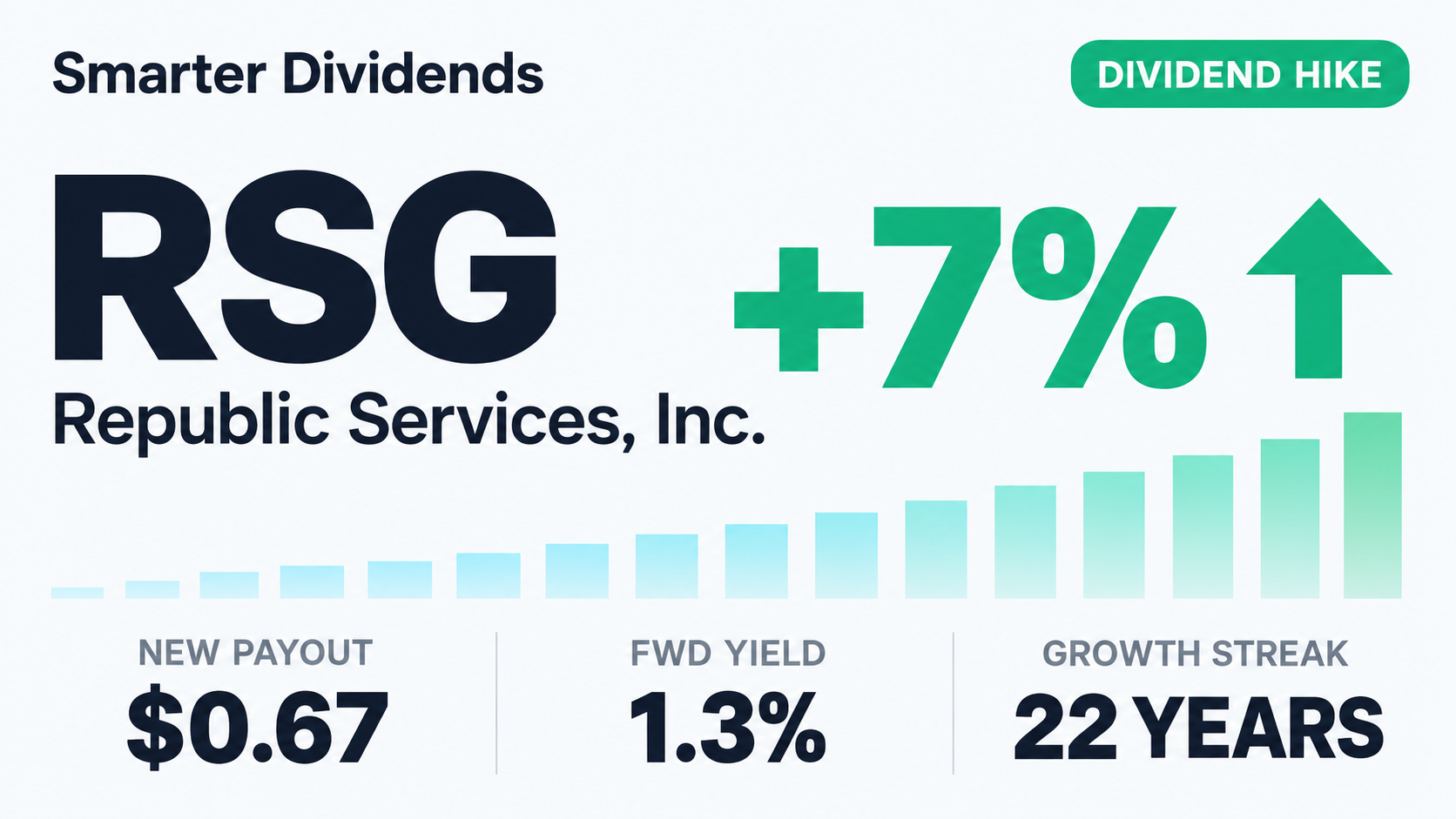
Republic Services Raises Quarterly Dividend 7.2% to $0.67
Republic Services raised its quarterly dividend 7.2% to $0.67, extending a 22-year growth streak as its stronger 2026 cash-flow outlook supports coverage.

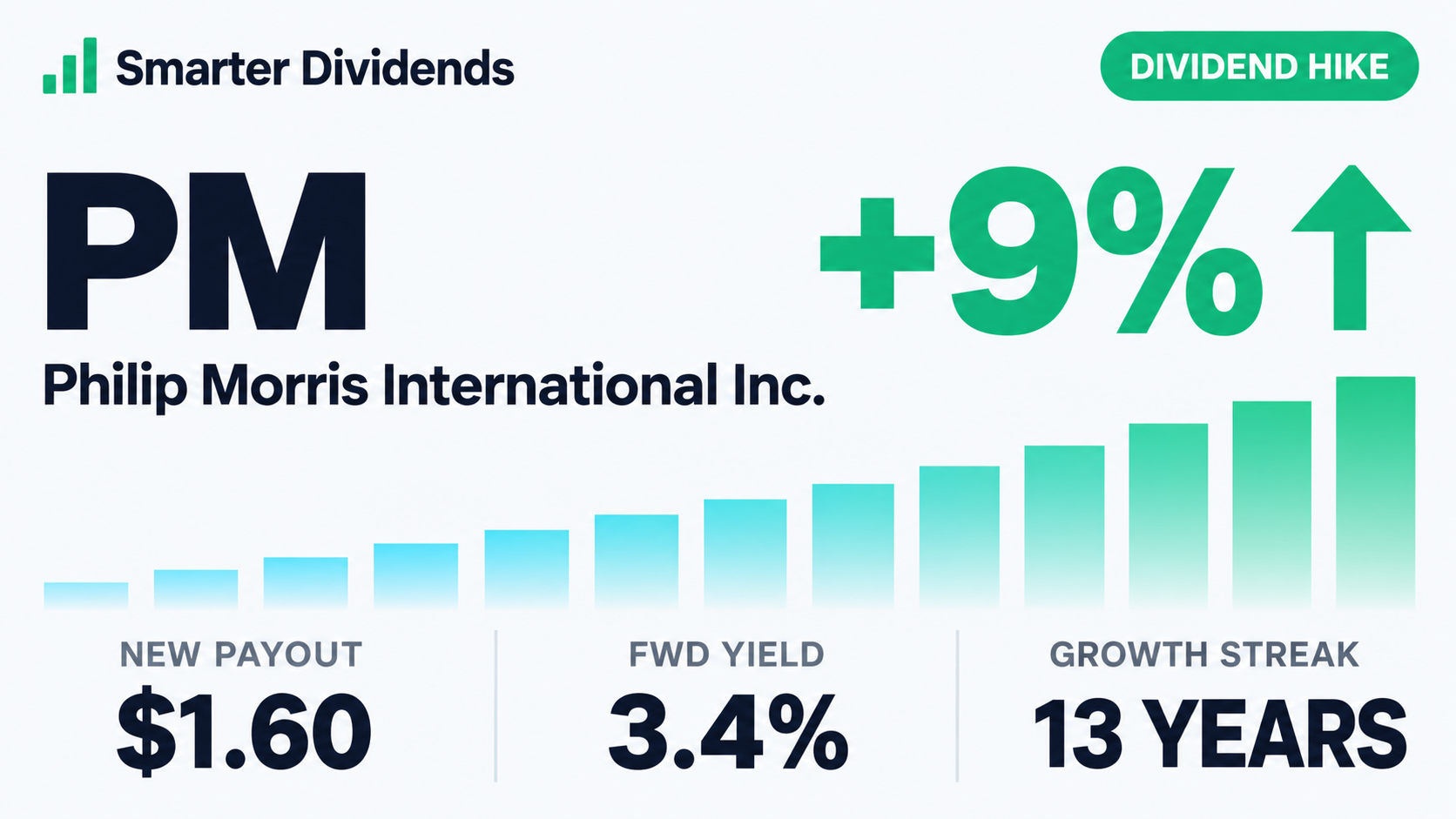
Philip Morris Raises Quarterly Dividend 8.8% to $1.60
Philip Morris lifted its quarterly payout 8.8% to $1.60, extending its annual growth record as earnings and cash-flow guidance support coverage.

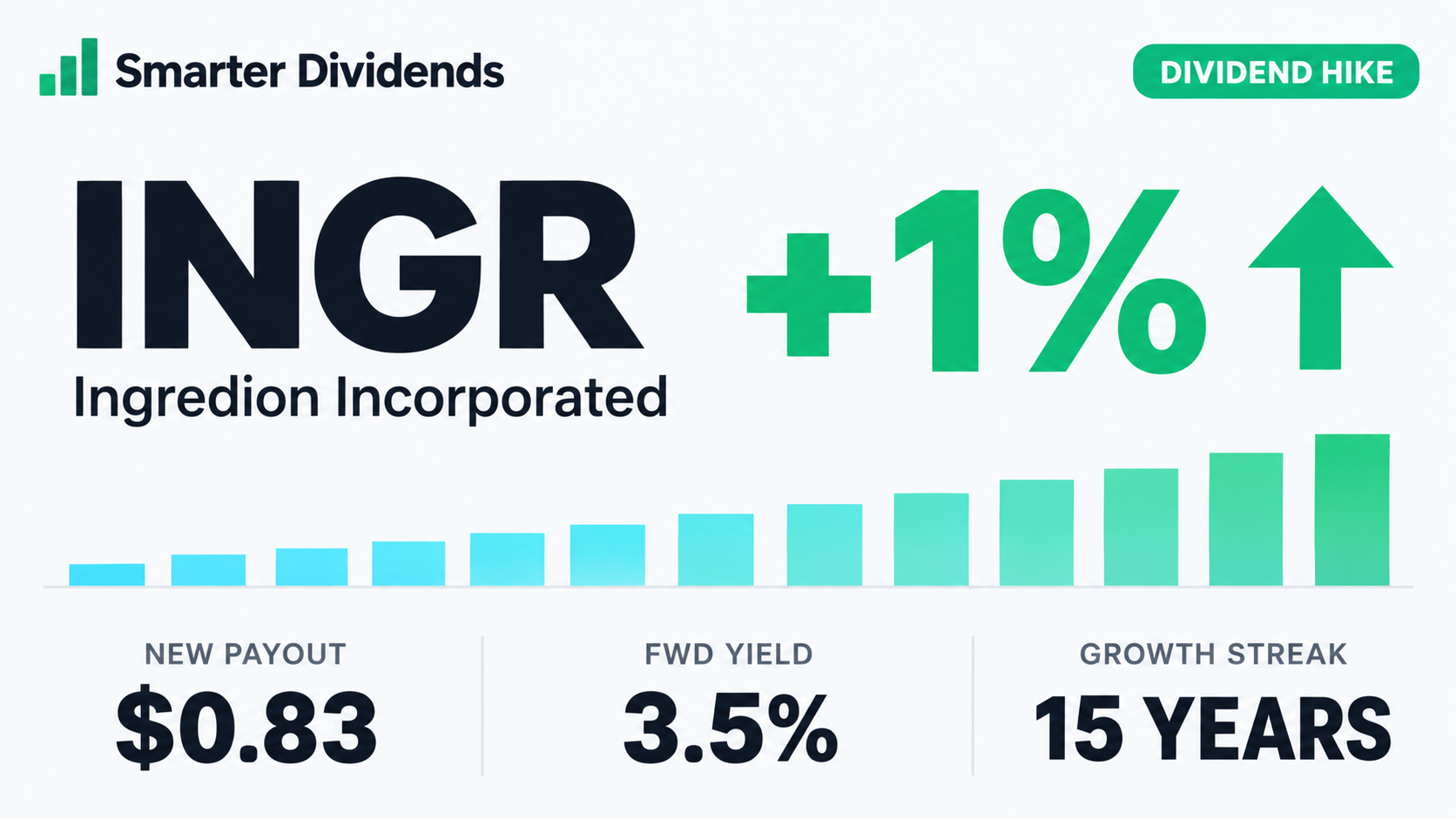
Ingredion Raises Quarterly Dividend 1.2% to $0.83
Ingredion lifted its quarterly dividend 1.2% to $0.83, extending a 15-year growth streak as earnings coverage remains strong despite operating pressures.

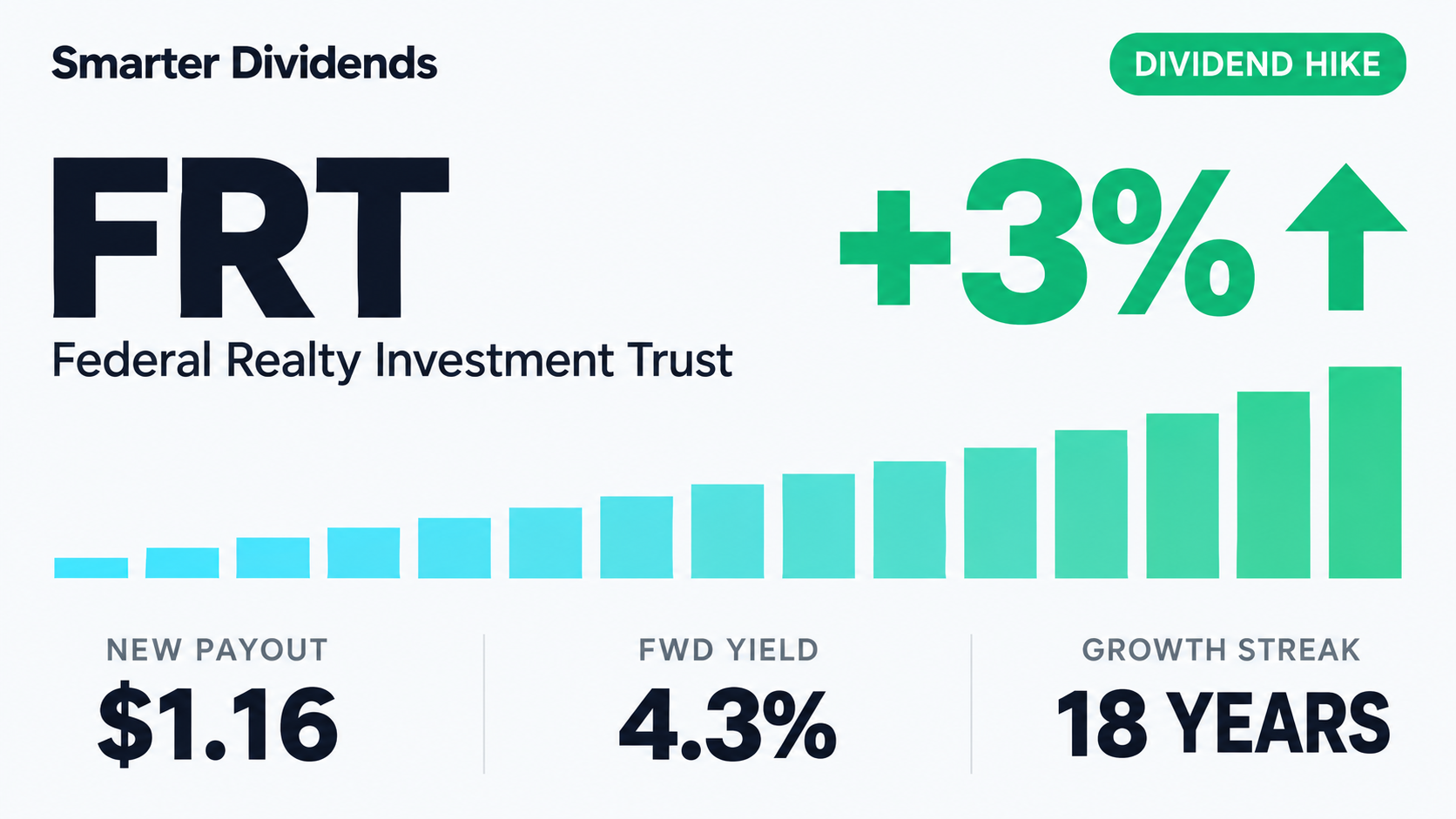
Federal Realty Raises Quarterly Dividend 2.7% to $1.16
Federal Realty lifted its quarterly dividend 2.7% to $1.16, backed by stronger core operations, raised guidance and a long record of increases.

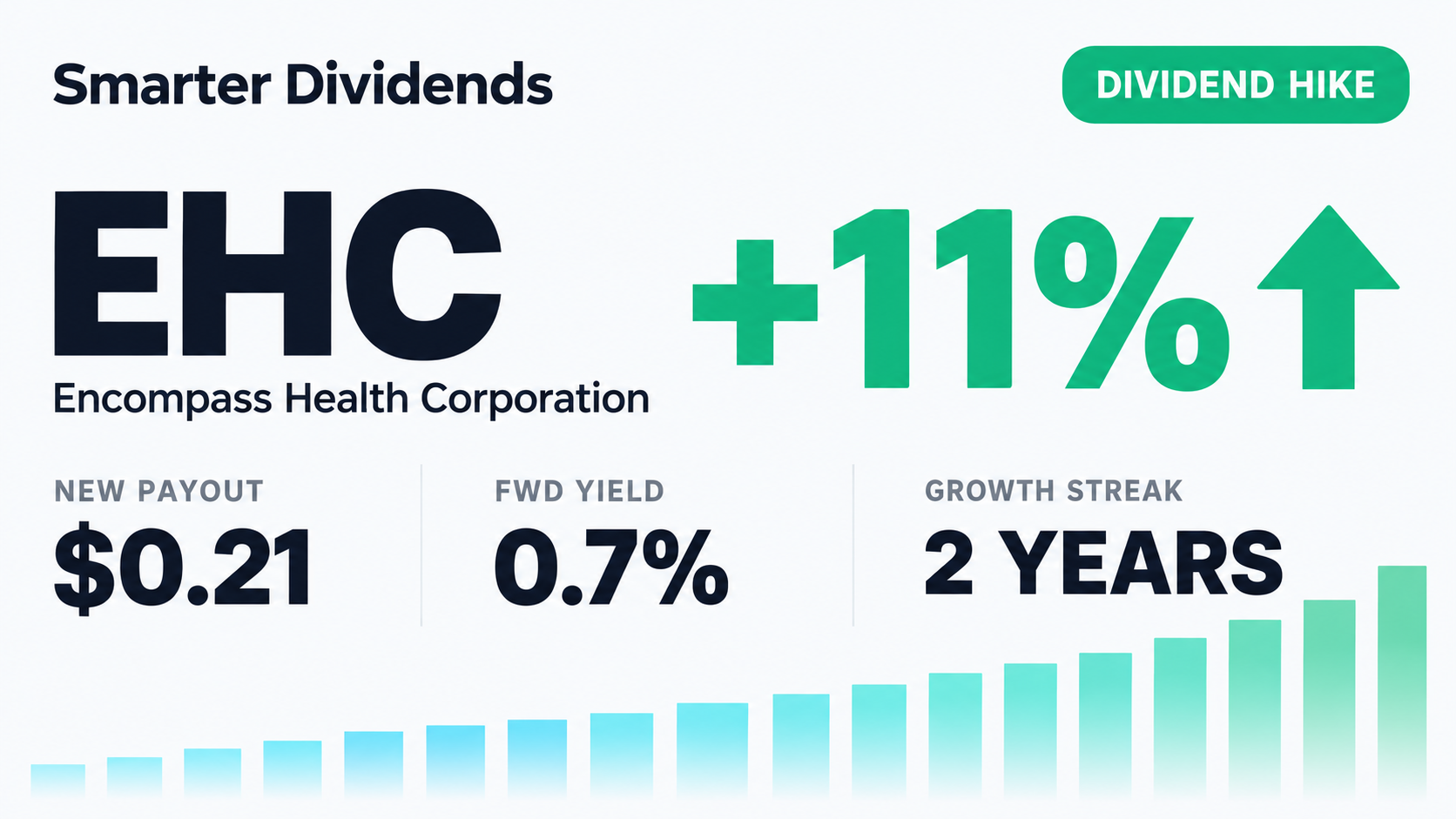
Encompass Health Raises Quarterly Dividend 10.5% to $0.21
Encompass Health raised its quarterly dividend 10.5% to $0.21 as earnings coverage remained wide, though its 0.69% yield trailed healthcare.