Glacier Bancorp Raises Quarterly Dividend 6.1% to $0.35
Glacier Bancorp lifted its quarterly dividend 6.1% to $0.35, while a 68% earnings payout ratio and B safety grade frame the payment's coverage.
 GBCI — Glacier Bancorp, Inc.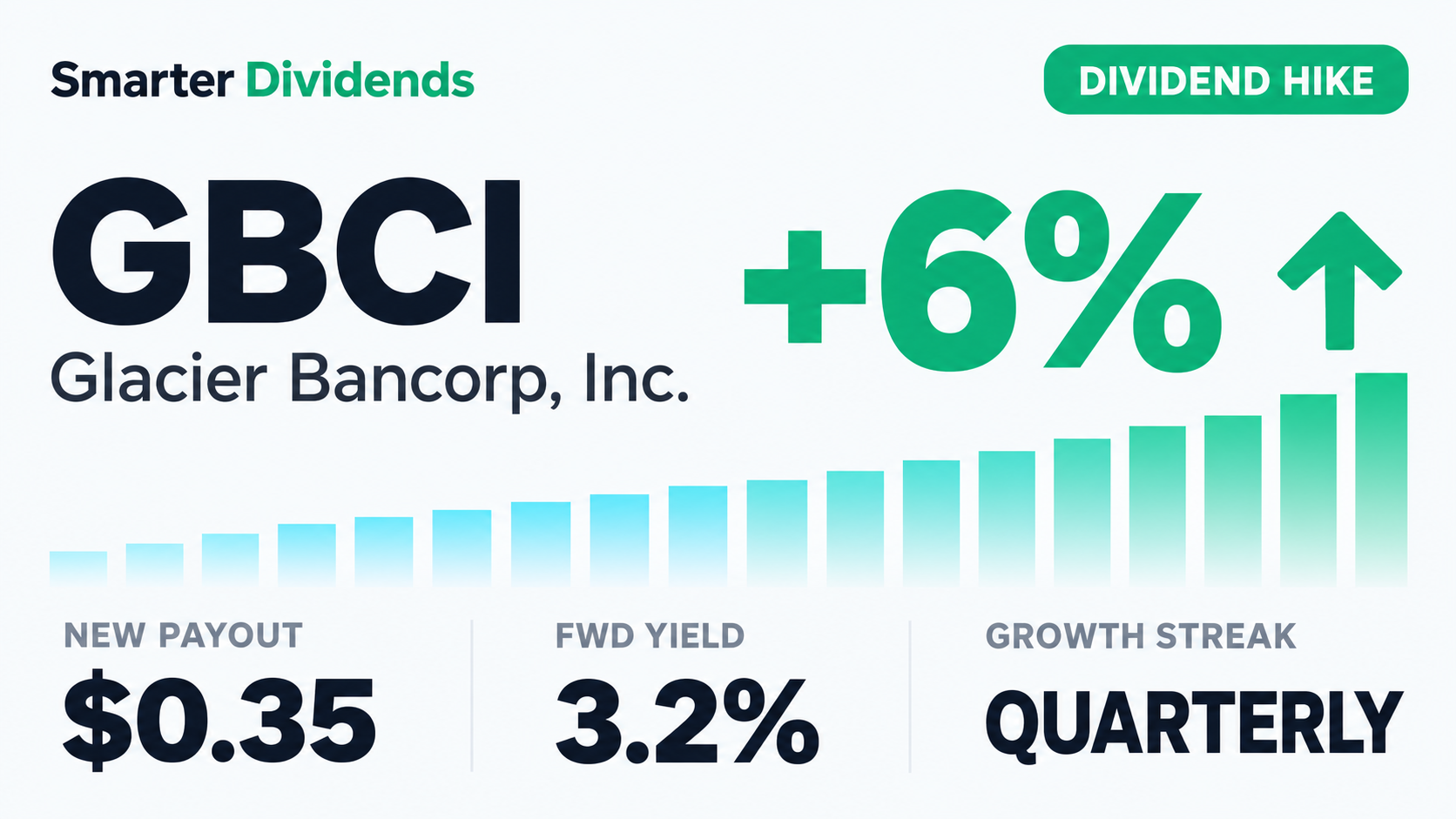
Key takeaways
- Glacier Bancorp raised its quarterly dividend 6.1% to $0.35 from $0.33.
- The new rate equals $1.40 annually, producing $140.00 of yearly income for 100 shares.
- The dividend has a 68% earnings payout ratio and a SmarterDividends safety grade of B.
- The 3.19% forward yield is below the Financial Services sector median of 5.83%.
Glacier Bancorp, Inc. raised its quarterly dividend 6.1% to $0.35 a share from $0.33. The shares traded ex-dividend on October 6, 2026, and the new rate equates to an annual dividend of $1.40 a share.
Why the dividend changed
Glacier Bancorp did not provide a specific explanation for the increase in its dividend announcement. The decision followed a period of stronger earnings, wider lending margins and progress integrating Guaranty Bancshares, giving the board more operating support for a higher distribution.
Second-quarter net income rose to $97.9 million from $82.1 million in the preceding quarter and $52.8 million a year earlier. Diluted earnings per share increased to $0.75 from $0.63 sequentially, while net interest income reached $276 million. The tax-equivalent net interest margin expanded to 3.90 percent from 3.80 percent in the first quarter as funding costs declined.
The quarter also included completion of the core-system conversion for Guaranty, which Glacier acquired on October 1, 2025. The acquisition expanded Glacier into Texas and contributed to year-over-year growth in loans and deposits. Excluding Guaranty, the company still reported organic loan and deposit growth, indicating that the earnings improvement was not solely acquisition-driven.
Capital provided additional context. Glacier reported that tangible stockholders’ equity increased during the second quarter, primarily because of retained earnings. Its regulatory filing said both the company and its bank met applicable capital-adequacy requirements at June 30, 2026. Management has also said future dividends depend on net income, capital, asset quality, economic conditions and regulatory considerations.
Dividend track record
The increase breaks a long period at the previous quarterly rate. Glacier paid $0.33 on ex-dividend dates from December 10, 2024, through July 7, 2026, before moving to $0.35 on October 6, 2026. The pattern shows a resumption of growth rather than an uninterrupted annual-growth record. The consecutive-years growth streak stands at 0.
Annual totals also show the effects of payment timing and the earlier reset. Distributions totaled $1.38 across 5 payments in 2020 and rose 2.9% to $1.42 across 5 payments in 2021. The total remained $1.42 across 5 payments in 2022. The last annual cut occurred in 2022, with its full-year effect visible when the total fell 7.0% to $1.32 across 4 payments in 2023. Annual distributions then remained $1.32 across 4 payments in both 2024 and 2025.
The latest increase does not erase that history, but it lifts the quarterly rate above the level maintained during the previous three calendar years. Dividend growth over the past five years was 2.6% annual growth, reflecting the combination of the earlier reduction, the extended flat period and the new increase.
Is the dividend covered?
The dividend consumes 68% of earnings. That means most reported profit is being distributed, while a portion remains available to support capital, lending and other corporate needs. Coverage is positive, but the payout leaves less room for earnings volatility than a materially lower ratio would.
SmarterDividends rates the dividend B, a grade that denotes a safe payment. The assessment indicates that current earnings and balance-sheet conditions support the distribution, while recognizing that a regional bank’s dividend remains sensitive to credit costs, funding conditions and regulatory capital.
Asset quality is therefore relevant. Glacier reported that nonperforming assets increased during the second quarter, even as early-stage delinquencies declined from the preceding quarter. That mixed credit picture helps explain why coverage and capital trends remain important alongside the stronger earnings.
Yield and valuation
At a share price of $43.83, the annual dividend of $1.40 produces a 3.19% forward yield. That is below the Financial Services sector median forward yield of 5.83%. The comparison indicates that Glacier offers less current dividend income than the median sector company, without addressing differences in business mix, risk or expected growth.
SmarterDividends estimates fair value at $50.23 and assigns the shares a fair valuation verdict, representing 15% upside to that estimate. The stock recorded a 3.6% gain over the preceding year. At the current annual rate, 100 shares generate $140.00 in annual dividend income.
What to watch
Glacier’s next scheduled operating update is its third-quarter earnings conference call on October 23, 2026. The central items for dividend coverage are earnings per share, net interest margin, deposit costs, organic loan growth and capital retention following the Guaranty integration.
Credit trends also warrant attention. Management has said loan growth, portfolio composition, credit quality, economic forecasts and actual loss experience determine the allowance for credit losses. Changes in nonperforming assets or provisioning could affect the earnings base supporting the 68% payout ratio.
The board’s next dividend action will provide evidence on whether the $0.35 rate becomes the new baseline. Until then, the declared increase establishes annual dividend income of $1.40 a share but does not create an active annual-growth streak.
GBCI dividend data
From the SmarterDividends dataset, updated daily
- Forward yield
- 3.19%
- Payout ratio
- 68%
- Growth streak
- 0 yrs
- Safety grade
- B · 67/100
| Ex-dividend date | Amount | Change |
|---|---|---|
| Oct 6, 2026 | $0.3500 | +6.1% |
| Jul 7, 2026 | $0.3300 | +0.0% |
| Apr 7, 2026 | $0.3300 | +0.0% |
| Dec 9, 2025 | $0.3300 | +0.0% |
| Oct 7, 2025 | $0.3300 | +0.0% |
| Jul 8, 2025 | $0.3300 | +0.0% |
| Apr 8, 2025 | $0.3300 | +0.0% |
| Dec 10, 2024 | $0.3300 | +0.0% |
Frequently asked questions
How much is Glacier Bancorp's new dividend?
GBCI's new quarterly dividend is $0.35 per share, up 6.1% from $0.33.
How much does GBCI pay in dividends per year?
The annual dividend is $1.40 per share. At that rate, 100 shares produce $140.00 in annual dividend income.
What was the ex-dividend date for Glacier Bancorp's increase?
The shares traded ex-dividend on October 6, 2026.
Is GBCI's dividend safe?
SmarterDividends rates the dividend B. The earnings payout ratio is 68%, indicating positive coverage while leaving a portion of earnings in the business.
What is Glacier Bancorp's dividend yield?
GBCI's forward yield is 3.19%, compared with a Financial Services sector median forward yield of 5.83%.
Sources
See GBCI's full dividend profile
Yield, payout, safety score, history and the next ex-dividend date.
View GBCIEvery dividend increases this month, with the data behind it: Dividend Increases, October 2026.
More dividend news

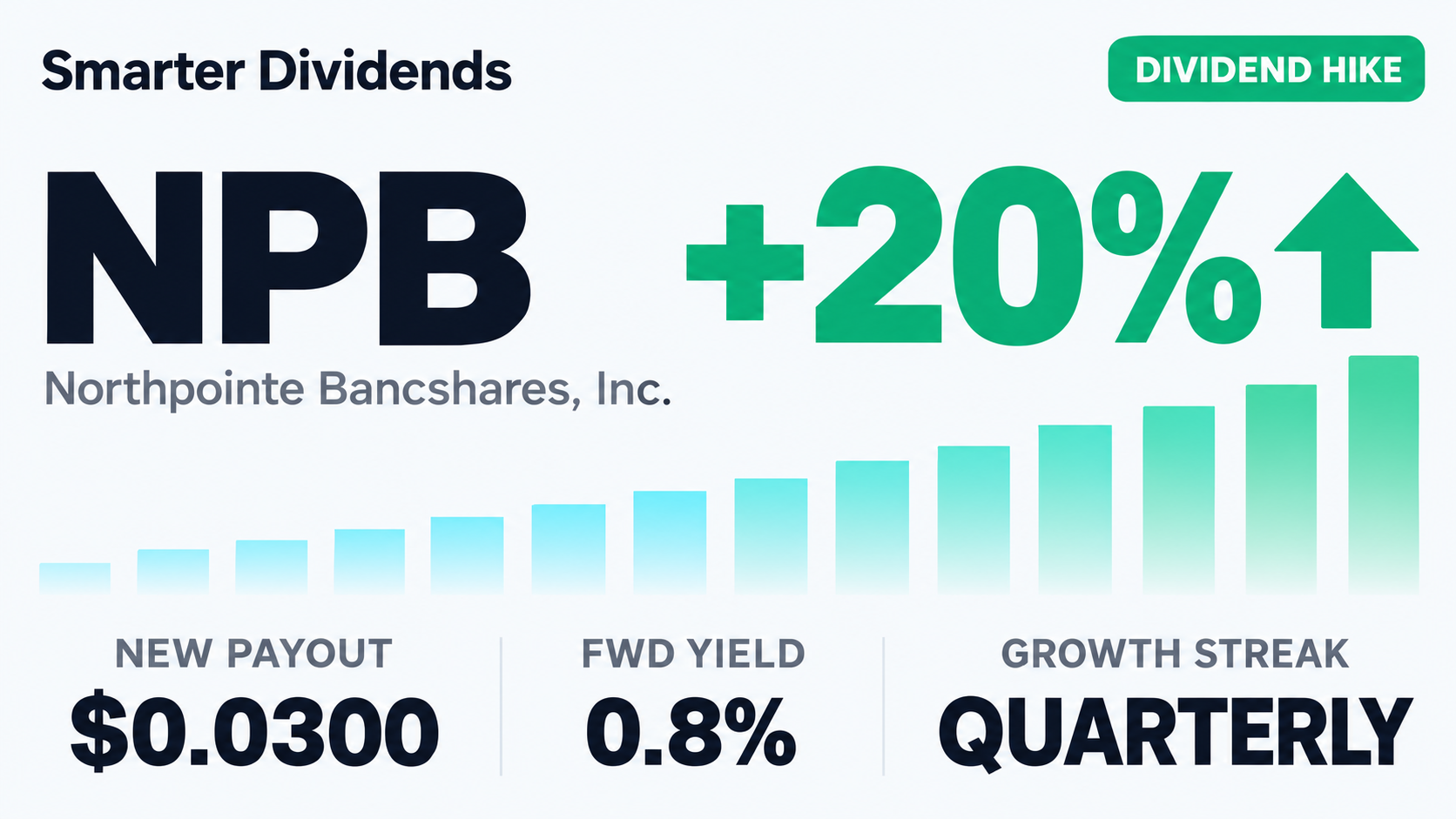
Northpointe Bancshares Raises Quarterly Dividend 20.0% to $0.03
Northpointe lifts its quarterly dividend 20.0% to $0.03 per share, while a 4% earnings payout ratio signals ample reported profit coverage.

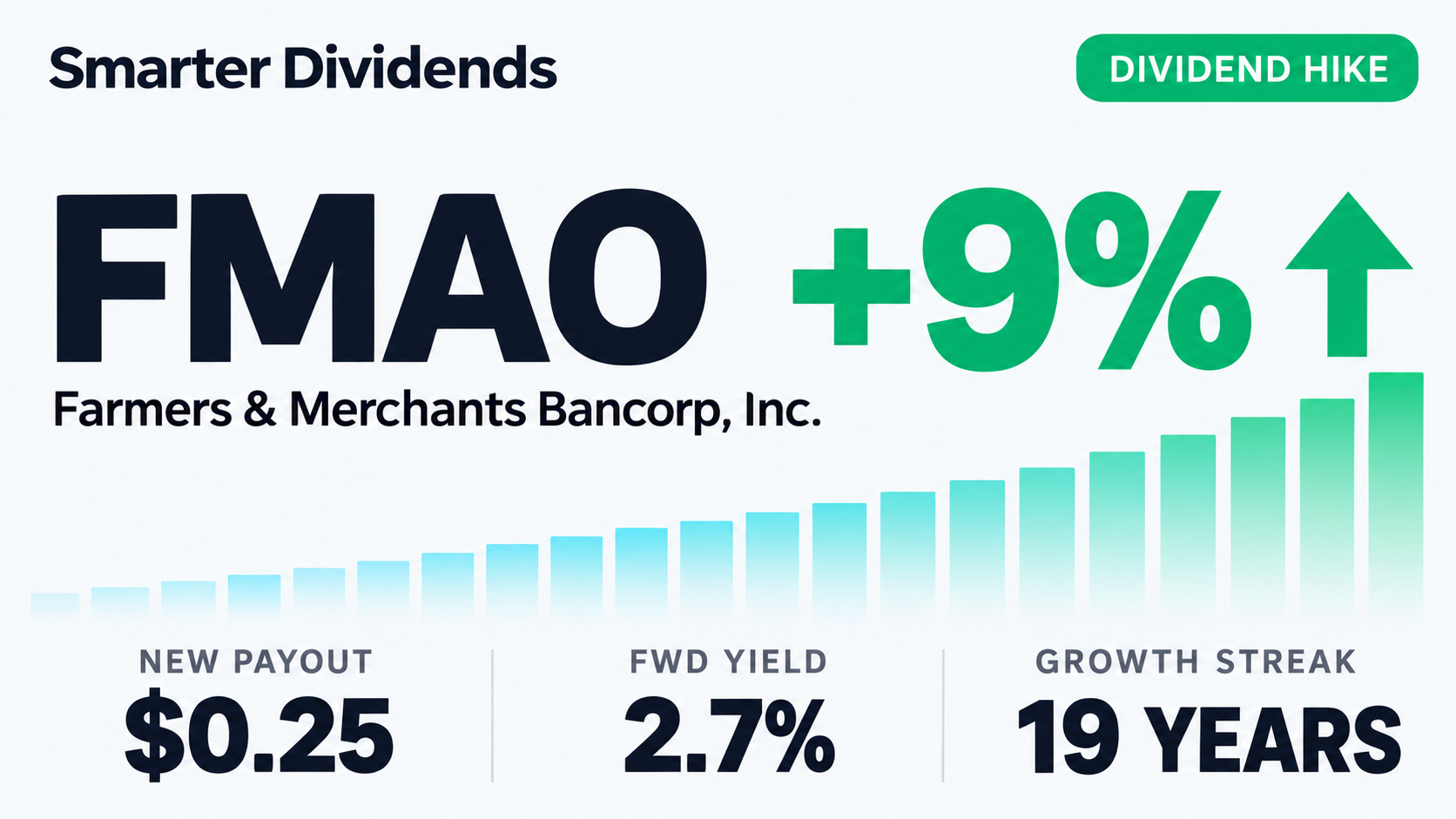
Farmers & Merchants Bancorp Raises Dividend Payment 8.7% to $0.25
FMAO's third-quarter payment rises 8.7% to $0.25, including a special dividend, while earnings and capital reinforce its long payout record.

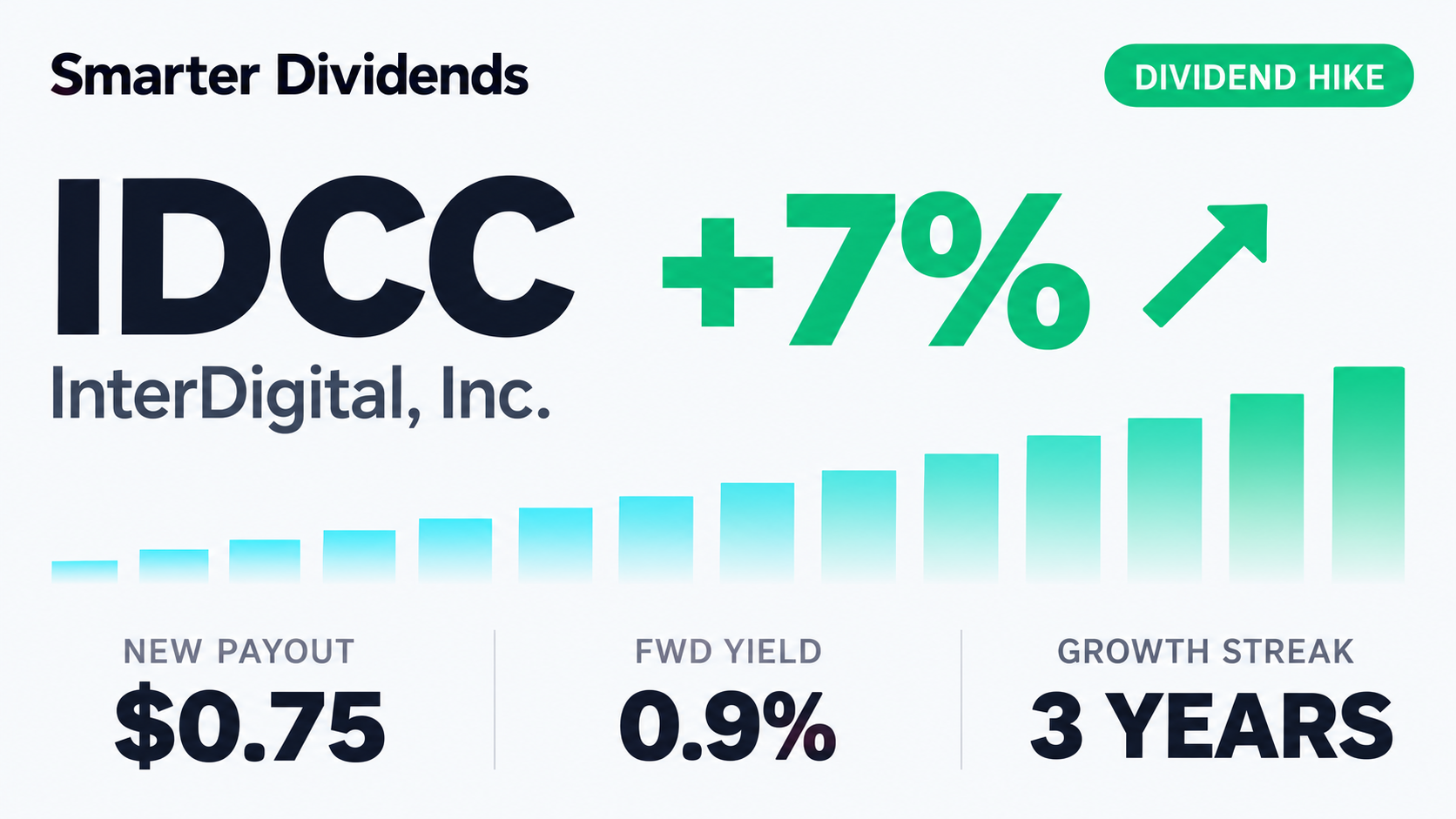
InterDigital Raises Quarterly Dividend 7.1% to $0.75
InterDigital raised its quarterly dividend 7.1% to $0.75, backed by a 32% earnings payout ratio, stronger licensing momentum and higher guidance.

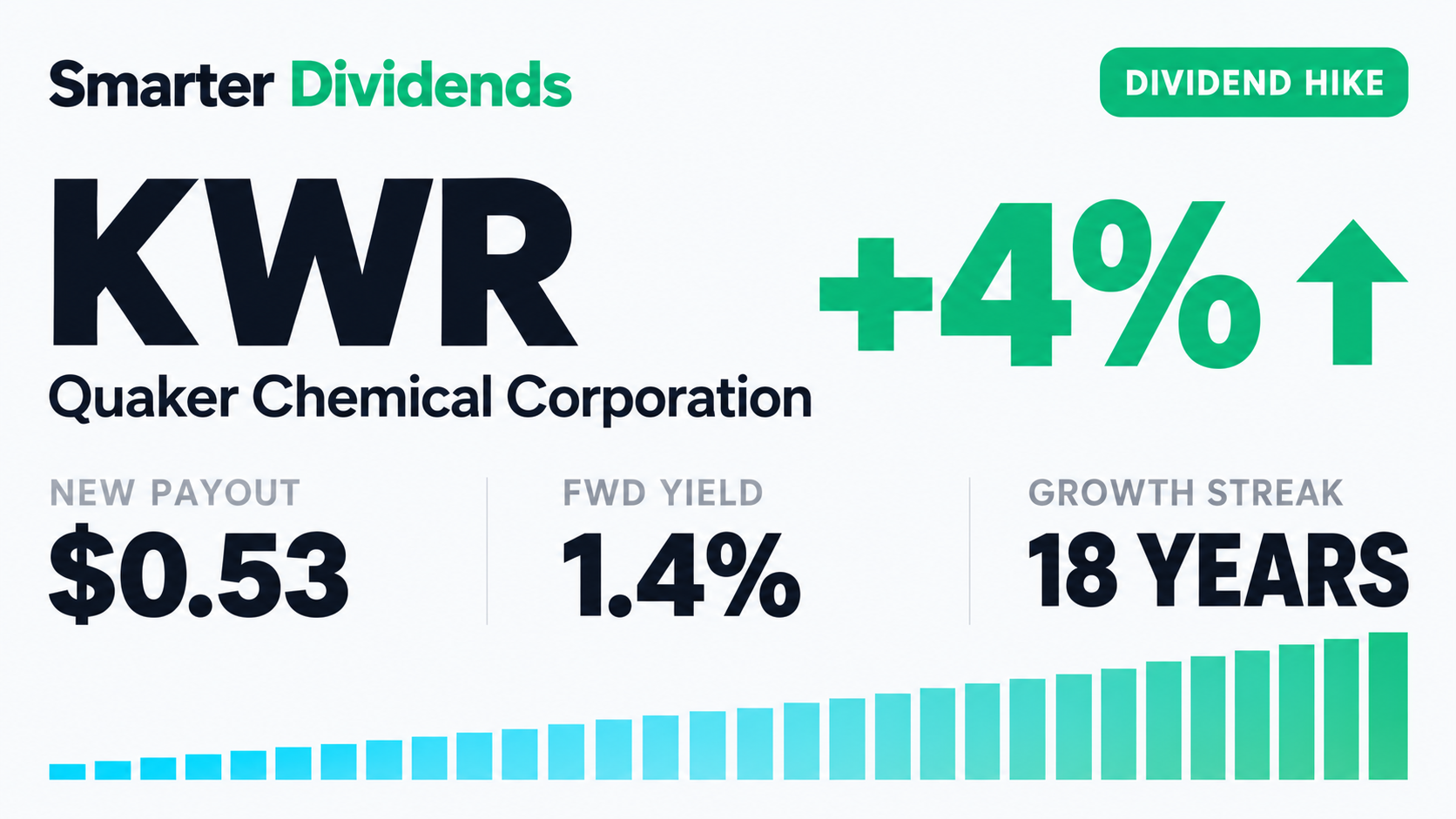
Quaker Chemical Raises Dividend 4.3% to $0.53
Quaker Chemical raised its quarterly dividend 4.3% to $0.53, extending an 18-year growth streak as stronger earnings support coverage.

Accenture Raises Quarterly Dividend 4.9% to $1.71
Accenture lifted its quarterly dividend 4.9% to $1.71, offering a 2.98% forward yield while its safety score remains in the borderline range.