InterDigital Raises Quarterly Dividend 7.1% to $0.75
InterDigital raised its quarterly dividend 7.1% to $0.75, backed by a 32% earnings payout ratio, stronger licensing momentum and higher guidance.
 IDCC — InterDigital, Inc.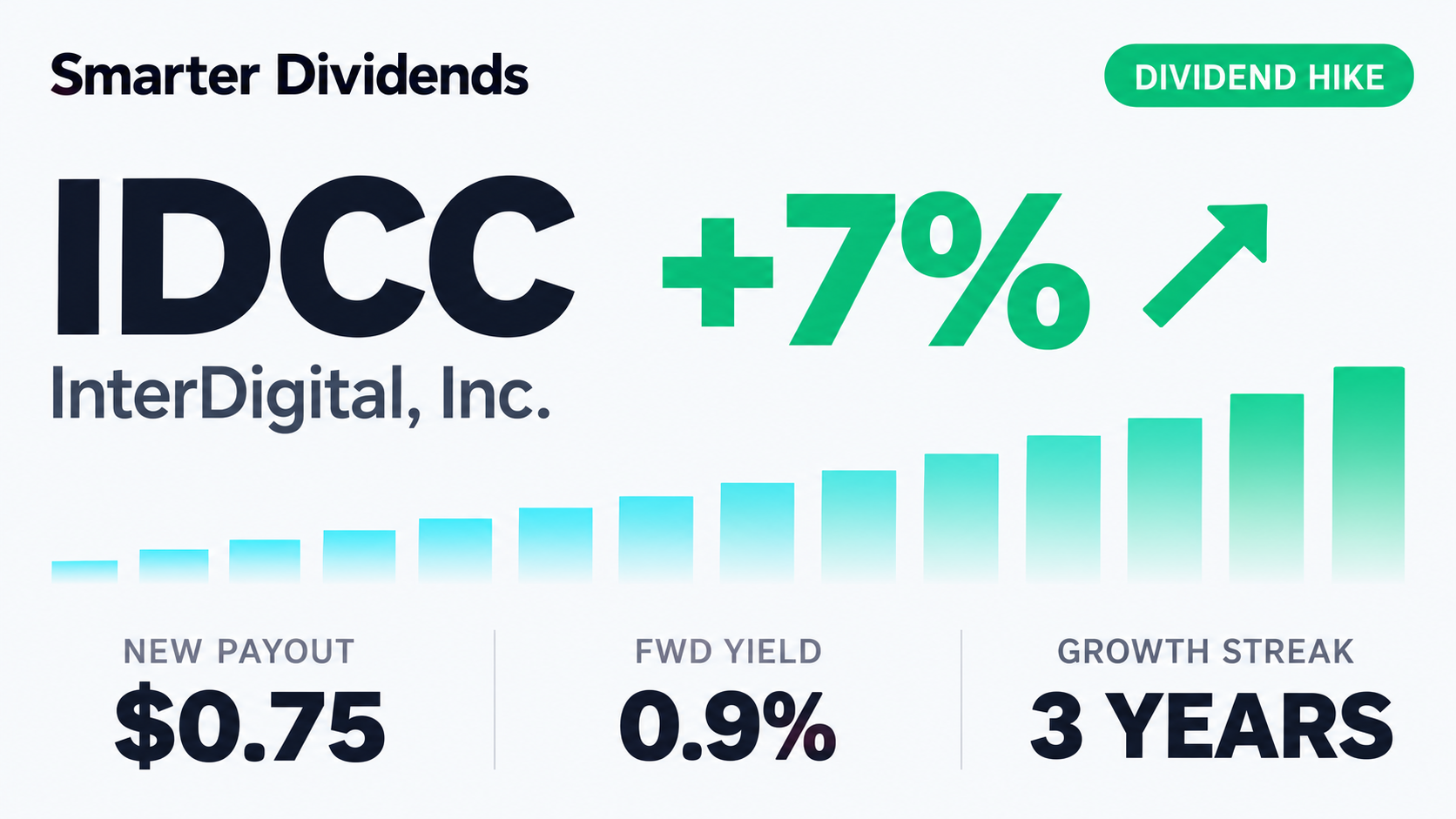
Key takeaways
- InterDigital raised its quarterly dividend 7.1% to $0.75 from $0.70.
- The new annual dividend is $3.00, equal to $300.00 of income for every 100 shares.
- The dividend carries a 32% earnings payout ratio and an A safety grade with a score of 92.
- The 0.94% forward yield is below the Technology sector median of 1.38%.
InterDigital, Inc. raised its quarterly dividend 7.1% to $0.75 per share from $0.70, lifting the annual dividend to $3.00. The shares traded ex-dividend on October 14, 2026, and the payment is due October 28, 2026.
Why the dividend changed
InterDigital’s board approved the higher regular dividend beginning with the fourth-quarter payment, but the declaration did not give a specific reason for the increase. The action was a regular payout adjustment, with no split, merger, spin-off or special dividend attached to it.
The operating context points to improved visibility in InterDigital’s patent-licensing business. In its second-quarter results, the company said annualized recurring revenue reached a record $625.7 million, up 13% from a year earlier. A new agreement with Amazon covered services and devices including Prime Video, although final terms remained subject to binding arbitration. InterDigital also signed an Internet of Things license with a financial-technology company and secured two European patent injunctions against Disney.
Management raised its full-year revenue guidance to a range of $775 million to $845 million, an increase of $85 million at the midpoint. The outlook included expected contributions from new agreements and enforcement actions. Second-quarter revenue was $260.2 million and net income was $116.4 million, while higher intellectual-property enforcement costs contributed to increased operating expenses. Those figures illustrate the business model’s combination of recurring licensing income and less predictable catch-up revenue.
The increase also followed a strong start to the year. InterDigital’s first-quarter report cited six new agreements, including a long-term renewal with Xiaomi and a license with LG Electronics covering televisions and computer displays. Chief Executive Liren Chen said the company had the world’s three largest smartphone vendors under license through the end of the decade. The dividend increase followed that broader licensing momentum, although management did not directly tie the payout decision to any single agreement.
Dividend track record
InterDigital’s annual payments were unchanged at $1.40 per share in 2020, 2021 and 2022. Growth resumed in 2023, when the total rose 3.6% to $1.45. It increased 13.8% to $1.65 in 2024 and 42.4% to $2.35 in 2025. The pattern shifted from a prolonged plateau to progressively larger annual distributions.
The recent quarterly history shows how that acceleration occurred. The company paid $0.45 for the January 8, 2025, ex-dividend date, followed by two payments of $0.60 and then $0.70. The $0.70 rate continued through July 8, 2026, before increasing to $0.75 for October 14, 2026. InterDigital’s published dividend history confirms the payment sequence.
The company has a 3-year dividend-growth streak, and its 5-year record amounts to 11.4% annual growth. The quarterly adjustments have been stepwise rather than confined to one fixed annual increase, producing faster annual growth in the two most recently completed years.
Is the dividend covered?
The annual dividend represents 32% of earnings. That payout ratio indicates earnings cover the distribution with a substantial margin, leaving the dividend less dependent on maintaining peak quarterly profit levels in a business where catch-up licensing revenue can fluctuate.
SmarterDividends rates the dividend A, with a safety score of 92. That falls within the very safe range of 80-100. In plain terms, the current earnings burden and payment record indicate a low level of dividend stress. The grade is an assessment of present coverage and resilience, not a guarantee that the payout cannot change.
Yield and valuation
At a share price of $319.30, InterDigital’s forward yield is 0.94%. That is below the Technology sector median forward yield of 1.38%, so the shares provide less current income than the sector benchmark despite the higher quarterly rate. The annual dividend produces $300.00 of income for every 100 shares.
The stock has recorded a 10.7% loss over one year. Even after that decline, SmarterDividends’ fair-value estimate is $153.04, producing an overvalued verdict and 52% downside to fair value. The valuation assessment is separate from dividend safety: the A grade addresses coverage, while the fair-value estimate addresses the relationship between the share price and estimated underlying value.
What to watch
The immediate event is the October 28, 2026, payment of $0.75 per share. After that, the next operating checkpoint is InterDigital’s third-quarter report and any update to its full-year revenue outlook of $775 million to $845 million.
Investors can also track the final economics of the Amazon agreement, which were left to binding arbitration, and the pace of new licensing and enforcement outcomes included in management’s guidance. Annualized recurring revenue will show whether the enlarged licensing base is holding, while catch-up revenue and enforcement costs will help explain quarter-to-quarter earnings volatility. For dividend coverage, the central figure remains the 32% earnings payout ratio as the company moves to the $3.00 annual rate.
IDCC dividend data
From the SmarterDividends dataset, updated daily
- Forward yield
- 0.94%
- Payout ratio
- 32%
- Growth streak
- 3 yrs
- Safety grade
- A · 92/100
| Ex-dividend date | Amount | Change |
|---|---|---|
| Oct 14, 2026 | $0.7500 | +7.1% |
| Jul 8, 2026 | $0.7000 | +0.0% |
| Apr 8, 2026 | $0.7000 | +0.0% |
| Jan 14, 2026 | $0.7000 | +0.0% |
| Oct 8, 2025 | $0.7000 | +16.7% |
| Jul 9, 2025 | $0.6000 | +0.0% |
| Apr 9, 2025 | $0.6000 | +33.3% |
| Jan 8, 2025 | $0.4500 | +0.0% |
Frequently asked questions
When was the IDCC ex-dividend date for the new $0.75 dividend?
The shares traded ex-dividend on October 14, 2026. The dividend is payable October 28, 2026.
How much is InterDigital’s new annual dividend?
The quarterly rate is $0.75 per share, and the annual dividend is $3.00 per share.
Is IDCC’s dividend safe?
SmarterDividends rates the dividend A with a safety score of 92, classified as very safe within the 80-100 range. The earnings payout ratio is 32%.
What is InterDigital’s dividend yield?
IDCC has a forward yield of 0.94% at a share price of $319.30. The Technology sector median forward yield is 1.38%.
How much dividend income do 100 IDCC shares produce?
At the $3.00 annual rate, 100 shares produce $300.00 in annual dividend income.
Sources
See IDCC's full dividend profile
Yield, payout, safety score, history and the next ex-dividend date.
View IDCCEvery dividend increases this month, with the data behind it: Dividend Increases, October 2026.
More dividend news

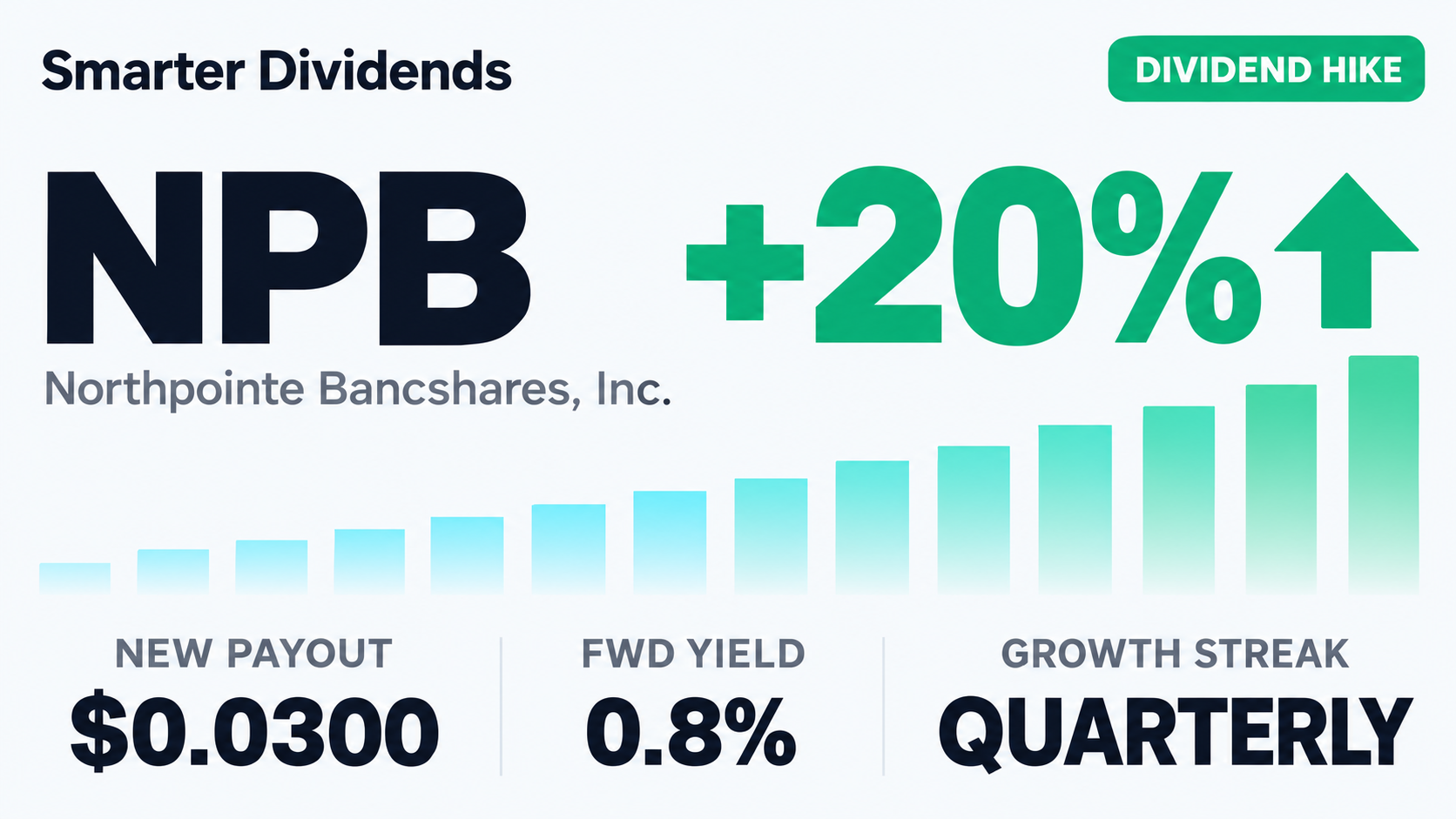
Northpointe Bancshares Raises Quarterly Dividend 20.0% to $0.03
Northpointe lifts its quarterly dividend 20.0% to $0.03 per share, while a 4% earnings payout ratio signals ample reported profit coverage.

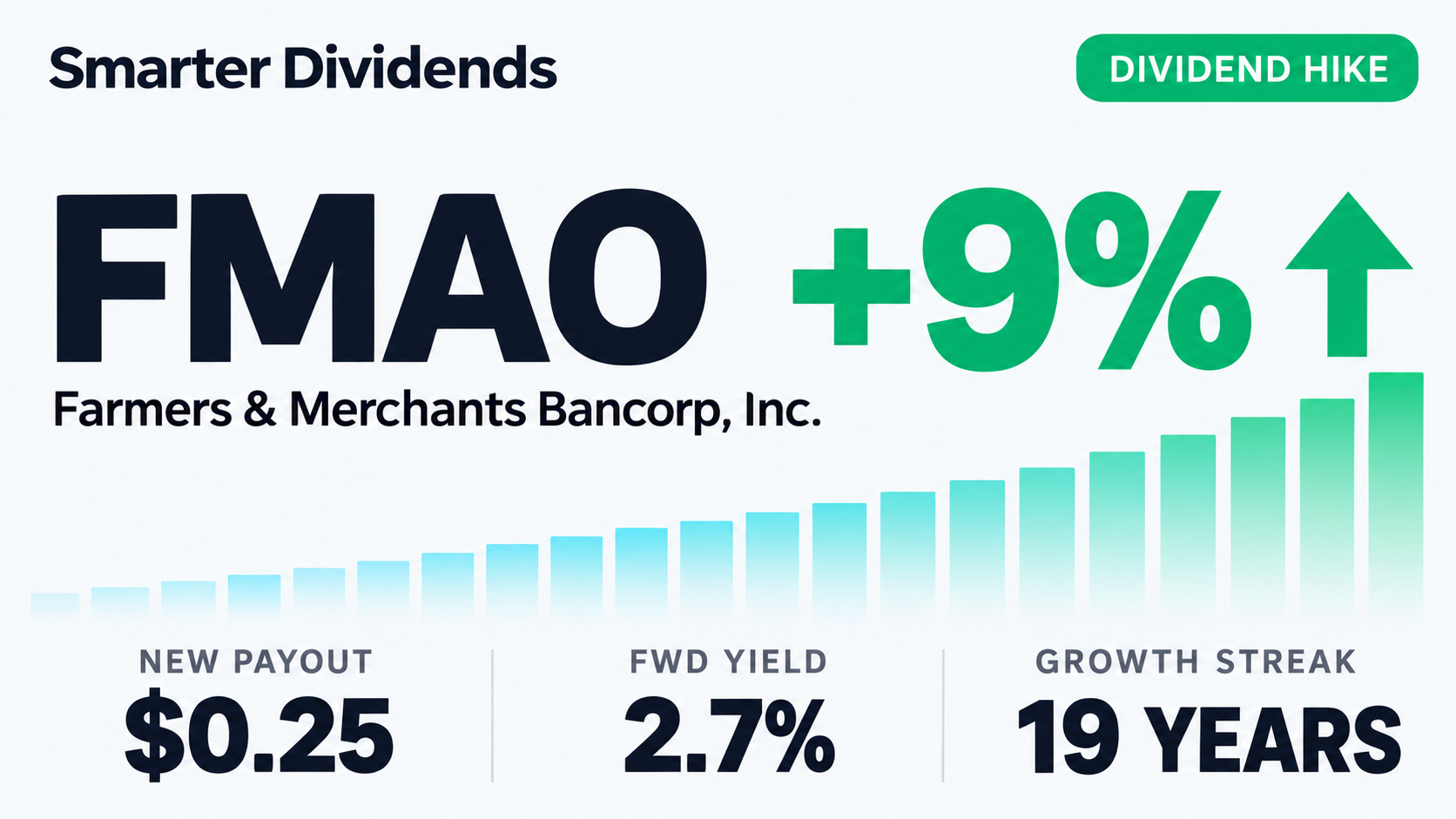
Farmers & Merchants Bancorp Raises Dividend Payment 8.7% to $0.25
FMAO's third-quarter payment rises 8.7% to $0.25, including a special dividend, while earnings and capital reinforce its long payout record.

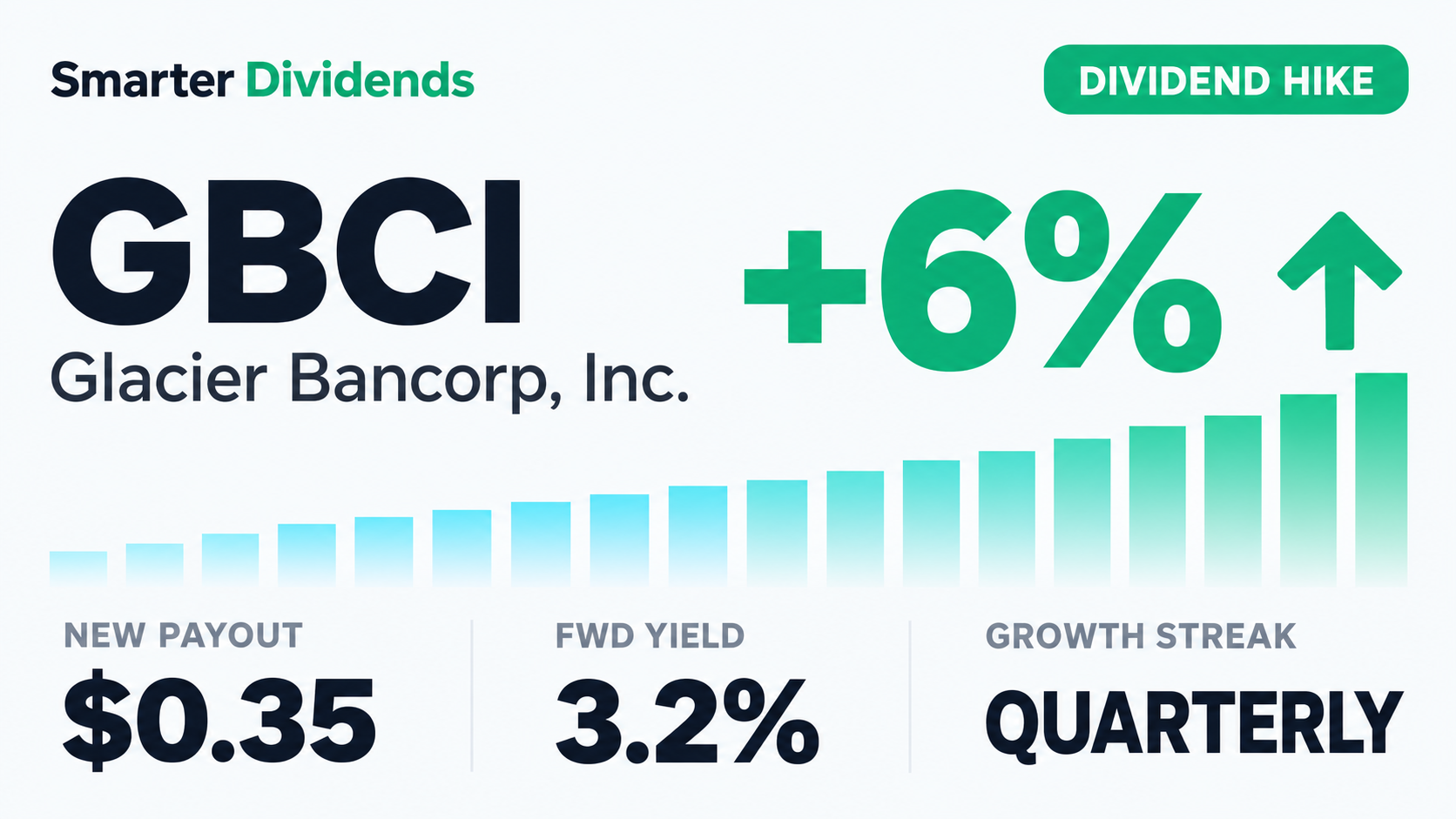
Glacier Bancorp Raises Quarterly Dividend 6.1% to $0.35
Glacier Bancorp lifted its quarterly dividend 6.1% to $0.35, while a 68% earnings payout ratio and B safety grade frame the payment's coverage.

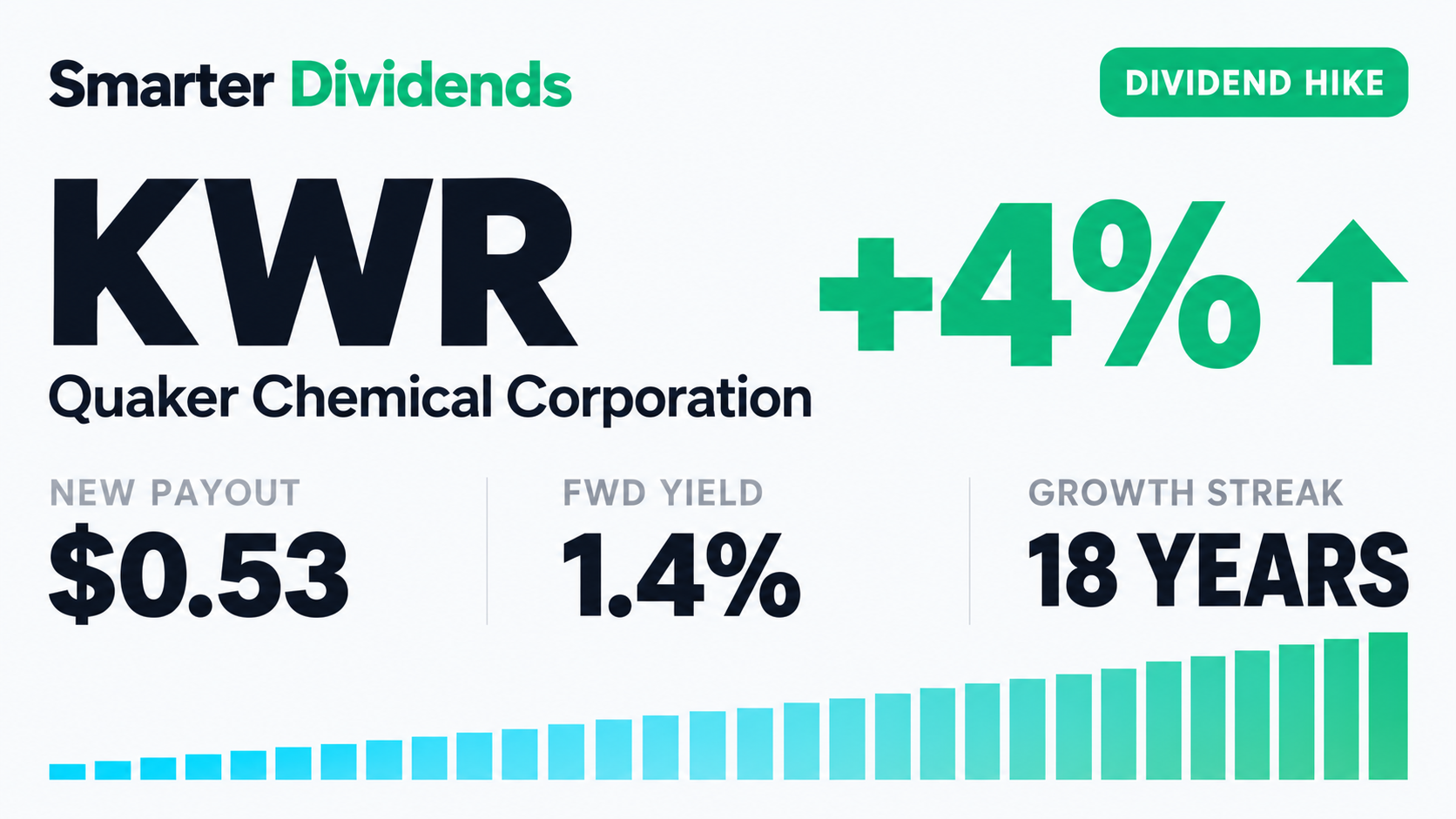
Quaker Chemical Raises Dividend 4.3% to $0.53
Quaker Chemical raised its quarterly dividend 4.3% to $0.53, extending an 18-year growth streak as stronger earnings support coverage.

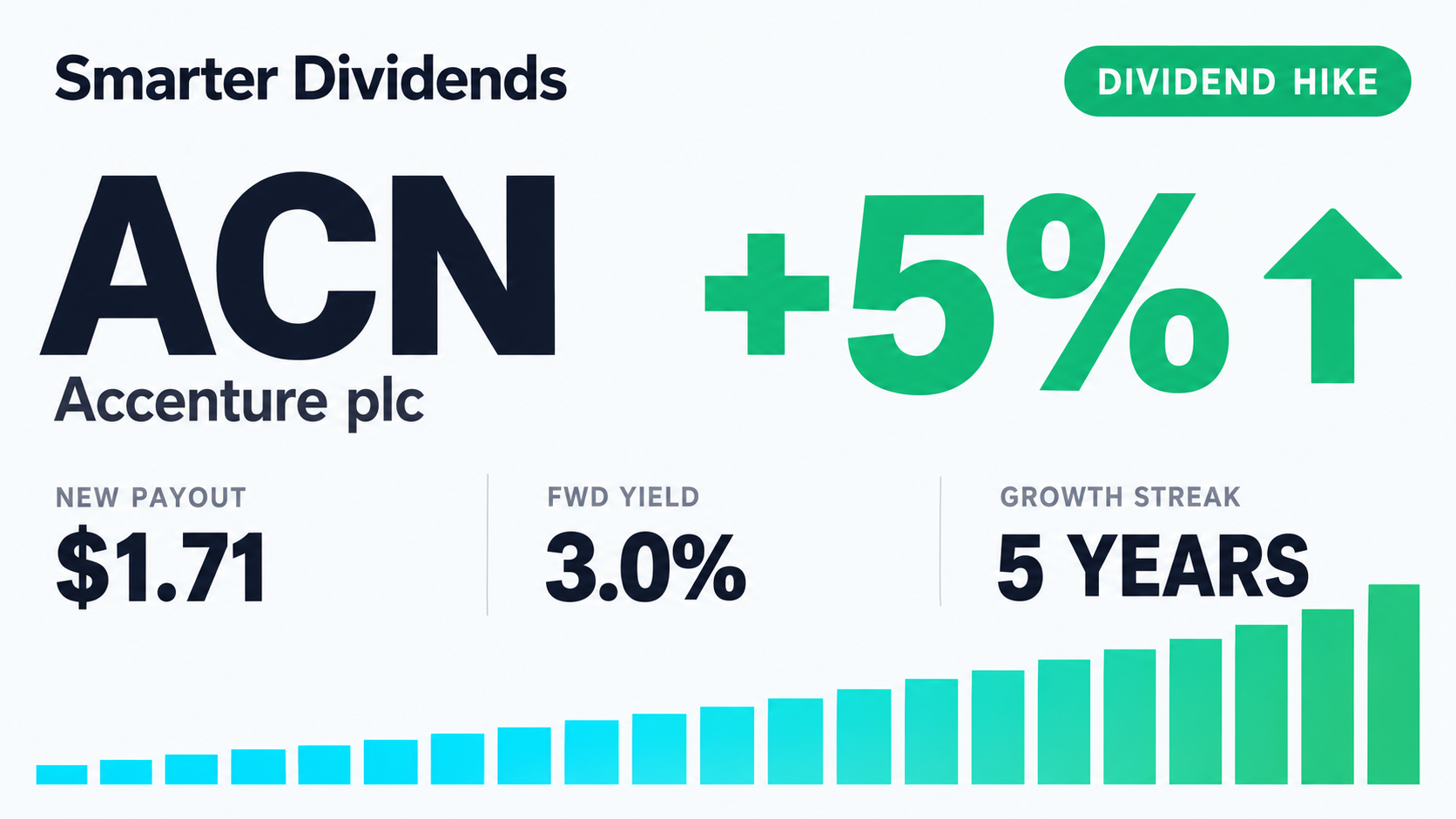
Accenture Raises Quarterly Dividend 4.9% to $1.71
Accenture lifted its quarterly dividend 4.9% to $1.71, offering a 2.98% forward yield while its safety score remains in the borderline range.