ESAB Corporation Raises Quarterly Dividend 20.0% to $0.12
ESAB raised its quarterly dividend 20.0% to $0.12, extending a 3-year growth streak with a 13% earnings payout ratio and a 0.71% forward yield.
 ESAB — ESAB Corporation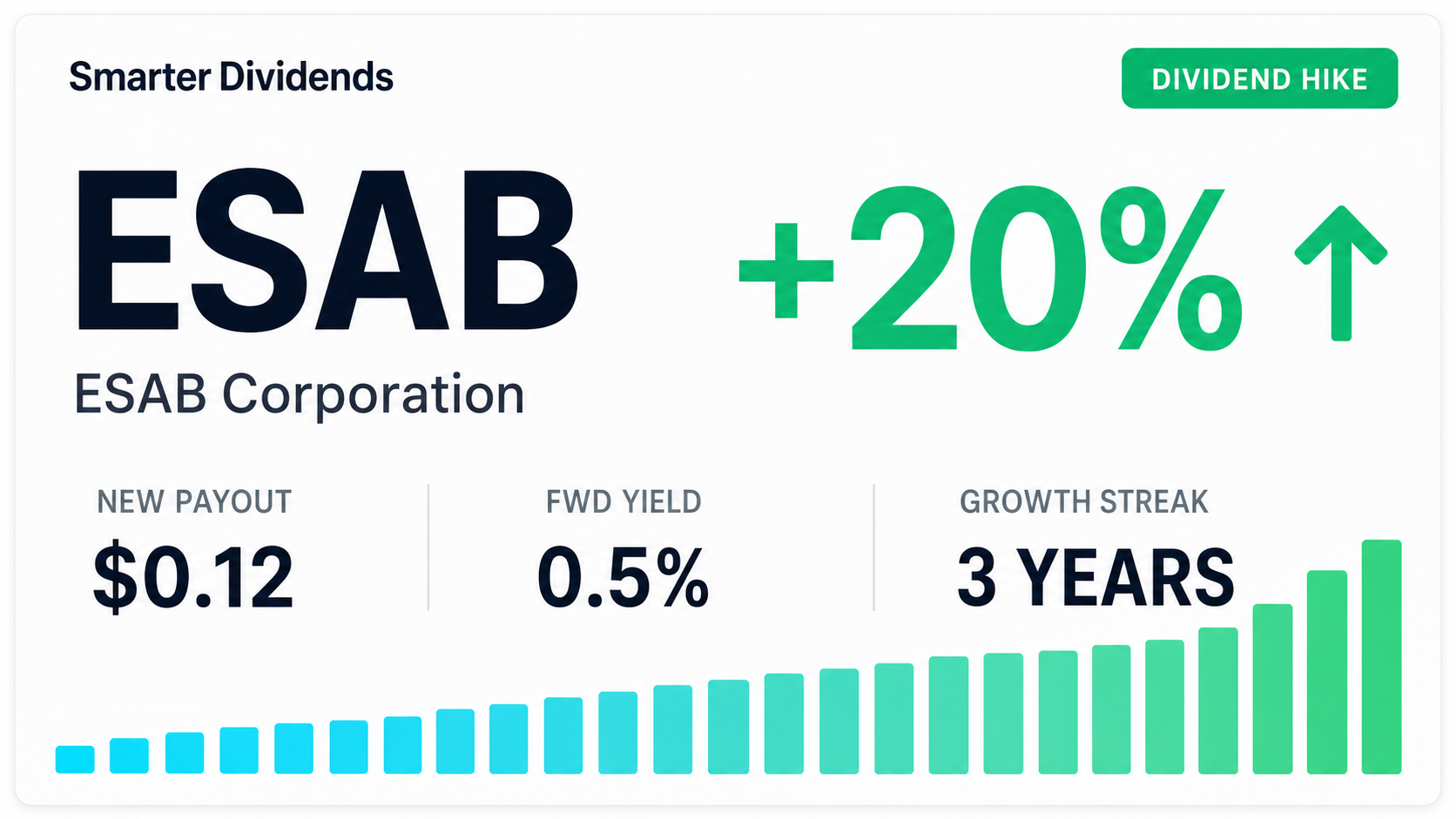
Key takeaways
- ESAB raised its quarterly dividend 20.0% to $0.12 a share from $0.10.
- The new annual dividend is $0.48 a share, equal to $48.00 for every 100 shares.
- The 13% earnings payout ratio supports a dividend safety score of 72 and a B grade.
- ESAB’s 0.71% forward yield remains below the Industrials sector median of 1.61%.
ESAB Corporation raised its quarterly cash dividend 20.0% to $0.12 a share from $0.10. The annual dividend is now $0.48; the higher rate first traded ex-dividend on July 2, 2026, and the next ex-dividend date is October 2, 2026.
Why the dividend changed
ESAB attributed the increase to confidence in its strong cash generation and what Chief Executive Shyam Kambeyanda called a balanced capital-allocation strategy. Management said the higher payment was consistent with returning value to shareholders while continuing to invest for long-term growth. The company did not tie the increase to a split, merger or other mechanical adjustment. ESAB’s dividend declaration
The decision followed a first quarter in which sales reached $746 million, up 10% on a reported basis, although core organic sales fell 1%. Adjusted free cash flow increased to $39.5 million from $30.4 million. ESAB also reiterated its full-year outlook at the time, before including the impact of its pending Eddyfi Technologies acquisition. ESAB’s first-quarter results
That acquisition formed the main competing use of capital. ESAB agreed to pay $1.45 billion for Eddyfi, an inspection and monitoring technology business, using cash, debt and committed equity financing. Management described the transaction as part of its plan to expand into faster-growing, higher-margin markets while maintaining a disciplined capital-allocation framework. ESAB’s Eddyfi announcement
ESAB subsequently closed Eddyfi ahead of schedule. Second-quarter sales rose 12.9% to $808 million, while core organic sales grew 2.5%. The company raised its core adjusted EBITDA outlook but lowered its core adjusted earnings-per-share range, reflecting the acquisition and financing structure. Management identified organic growth, margin expansion and deleveraging as its current operating priorities. ESAB’s second-quarter results
Dividend track record
The recent payment sequence shows regular step-ups rather than a one-time distribution. ESAB paid $0.08 on the April 4, 2025, ex-dividend date, raised the rate to $0.10 for July 3, 2025, and maintained that amount through April 2, 2026. The $0.12 payment with a July 2, 2026, ex-dividend date established the latest increase.
Annual totals have risen in each measured full year. Payments totaled $0.15 across three distributions in 2022, then increased 53.3% to $0.23 in 2023. The annual total rose 30.4% to $0.30 in 2024 and 26.7% to $0.38 in 2025. That progression gives ESAB 3 consecutive years of dividend growth. The percentage increases have moderated, but the payment record shows a consistent pattern of higher regular dividends.
Is the dividend covered?
The dividend uses 13% of earnings, leaving most reported profit available for acquisitions, debt service, capital spending and other corporate purposes. That is a conservative earnings payout for a company simultaneously raising its common dividend and financing a large acquisition.
SmarterDividends assigns ESAB a dividend safety score of 72 and rates the dividend B, meaning safe within the 66-79 range. The grade indicates solid coverage and room to absorb ordinary earnings volatility, although it is not a guarantee that the payment will remain unchanged.
ESAB’s latest quarterly filing identifies acquisitions, capital expenditures, debt service, restructuring and dividends among its principal cash requirements. The company said operating cash flow remained in line with the prior-year period and described its liquidity sources as adequate for its near-term and longer-term needs. The additional debt and integration spending associated with Eddyfi nevertheless make cash conversion and deleveraging relevant to future coverage. ESAB’s second-quarter Form 10-Q
Yield and valuation
At a share price of $66.57 and market value of $4.1 billion, ESAB’s forward dividend yield is 0.71%. That is below the Industrials sector median forward yield of 1.61%, so the shares provide less current dividend income than the sector benchmark despite the 20.0% increase.
SmarterDividends estimates fair value at $74.32 and classifies the valuation as fair, with 14% upside to that estimate. The fair verdict places the dividend and its growth record in the context of a valuation that is neither classified as discounted nor expensive.
What to watch
The next fixed dividend milestone is the October 2, 2026, ex-dividend date. The quarterly rate remains $0.12, equivalent to $48.00 of annual income for every 100 shares at the current annual dividend.
Operationally, the next earnings update will provide evidence on Eddyfi integration, debt reduction and cash conversion. ESAB’s current outlook calls for total core sales growth of 11.0% to 14.0%, core organic sales growth of 2.0% to 4.0%, core adjusted EBITDA of $615 million to $625 million and core adjusted earnings per share of $5.40 to $5.50. ESAB’s second-quarter results
The financing mix also warrants attention. ESAB funded Eddyfi with cash, senior notes, revolving credit and issuances of common and mandatory convertible preferred stock. Management’s stated focus on deleveraging makes debt balances, interest expense and acquisition-related cash costs the clearest items to monitor alongside the $0.12 common dividend and B safety grade. ESAB’s second-quarter Form 10-Q
ESAB dividend data
From the SmarterDividends dataset, updated daily
- Forward yield
- 0.73%
- Payout ratio
- 13%
- Growth streak
- 3 yrs
- Safety grade
- B · 71/100
| Ex-dividend date | Amount | Change |
|---|---|---|
| Oct 2, 2026 | $0.1200 | +0.0% |
| Jul 2, 2026 | $0.1200 | +20.0% |
| Apr 2, 2026 | $0.1000 | +0.0% |
| Dec 31, 2025 | $0.1000 | +0.0% |
| Oct 3, 2025 | $0.1000 | +0.0% |
| Jul 3, 2025 | $0.1000 | +25.0% |
| Apr 4, 2025 | $0.0800 | +0.0% |
| Dec 31, 2024 | $0.0800 | +0.0% |
Frequently asked questions
When is the next ESAB ex-dividend date?
The next ESAB ex-dividend date is October 2, 2026.
How much is ESAB’s new dividend per year?
ESAB’s quarterly dividend is $0.12 a share, for an annual dividend of $0.48 a share.
Is ESAB’s dividend safe?
SmarterDividends gives ESAB a safety score of 72 and a B grade, classified as safe within the 66-79 range. The earnings payout ratio is 13%.
What is ESAB’s dividend yield?
ESAB’s forward yield is 0.71% at a share price of $66.57, compared with the Industrials sector median of 1.61%.
How much annual dividend income do 100 ESAB shares produce?
At the current annual dividend, 100 ESAB shares produce $48.00 in annual income.
Sources
See ESAB's full dividend profile
Yield, payout, safety score, history and the next ex-dividend date.
View ESABEvery dividend increases this month, with the data behind it: Dividend Increases, August 2026.
More dividend news

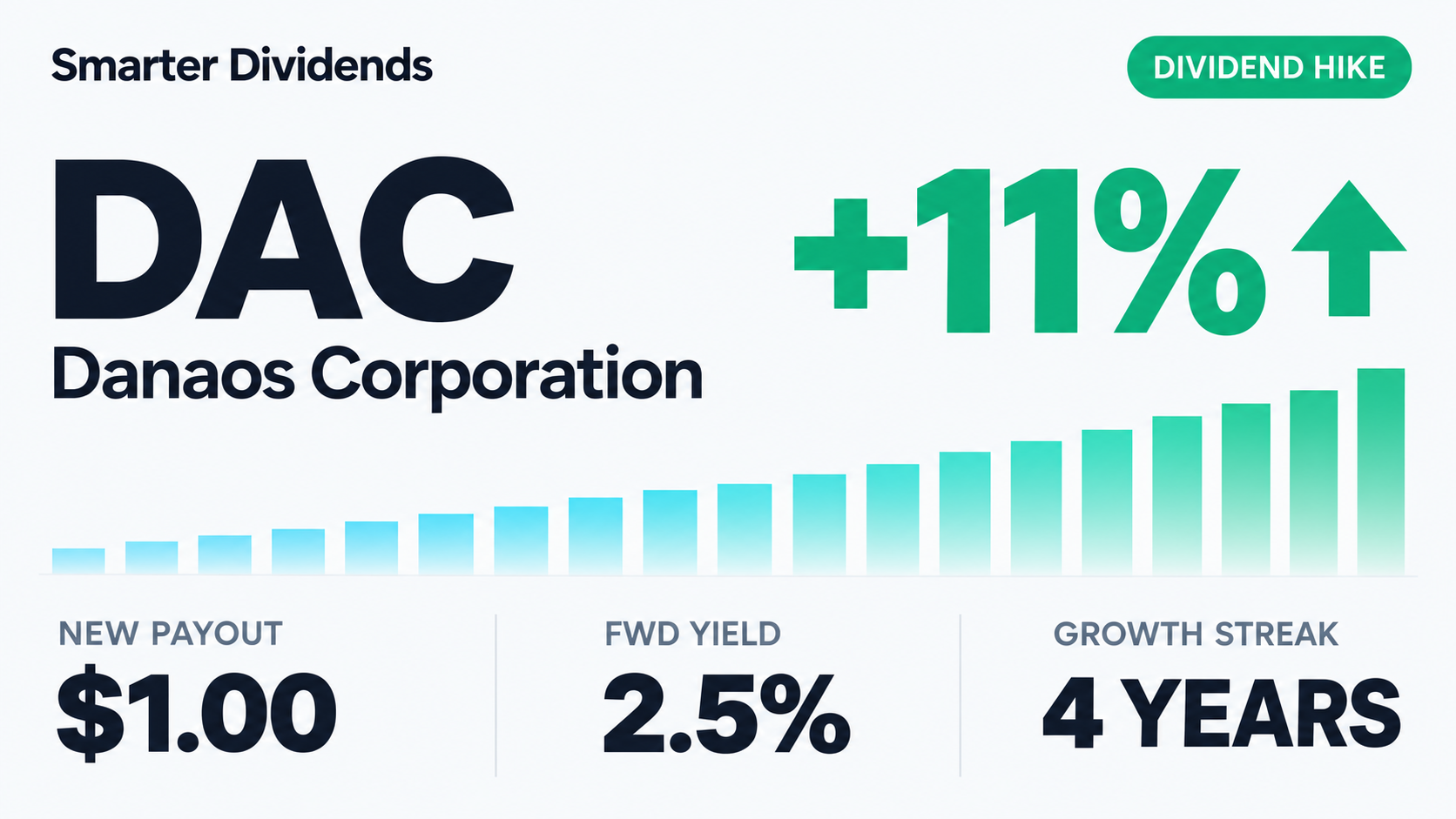
Danaos Raises Quarterly Dividend 11.1% to $1.00
Danaos lifted its quarterly dividend 11.1% to $1.00, payable October 22, as strong liquidity and contracted revenue support shareholder returns.

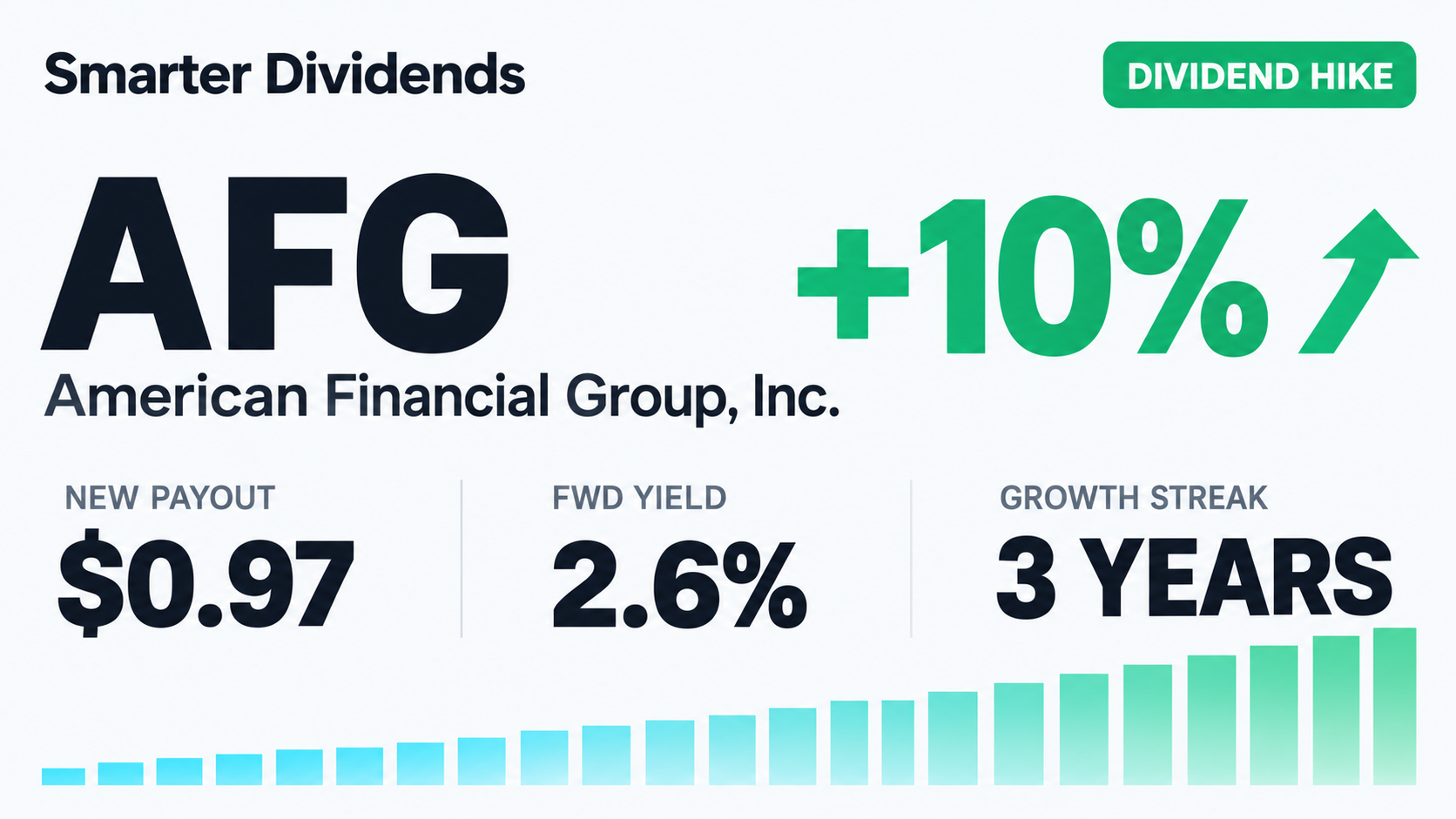
American Financial Group Raises Dividend 10.2% to $0.97
American Financial Group raised its quarterly dividend 10.2% to $0.97, with the higher payout due October 23, 2026, as underwriting profit improved.

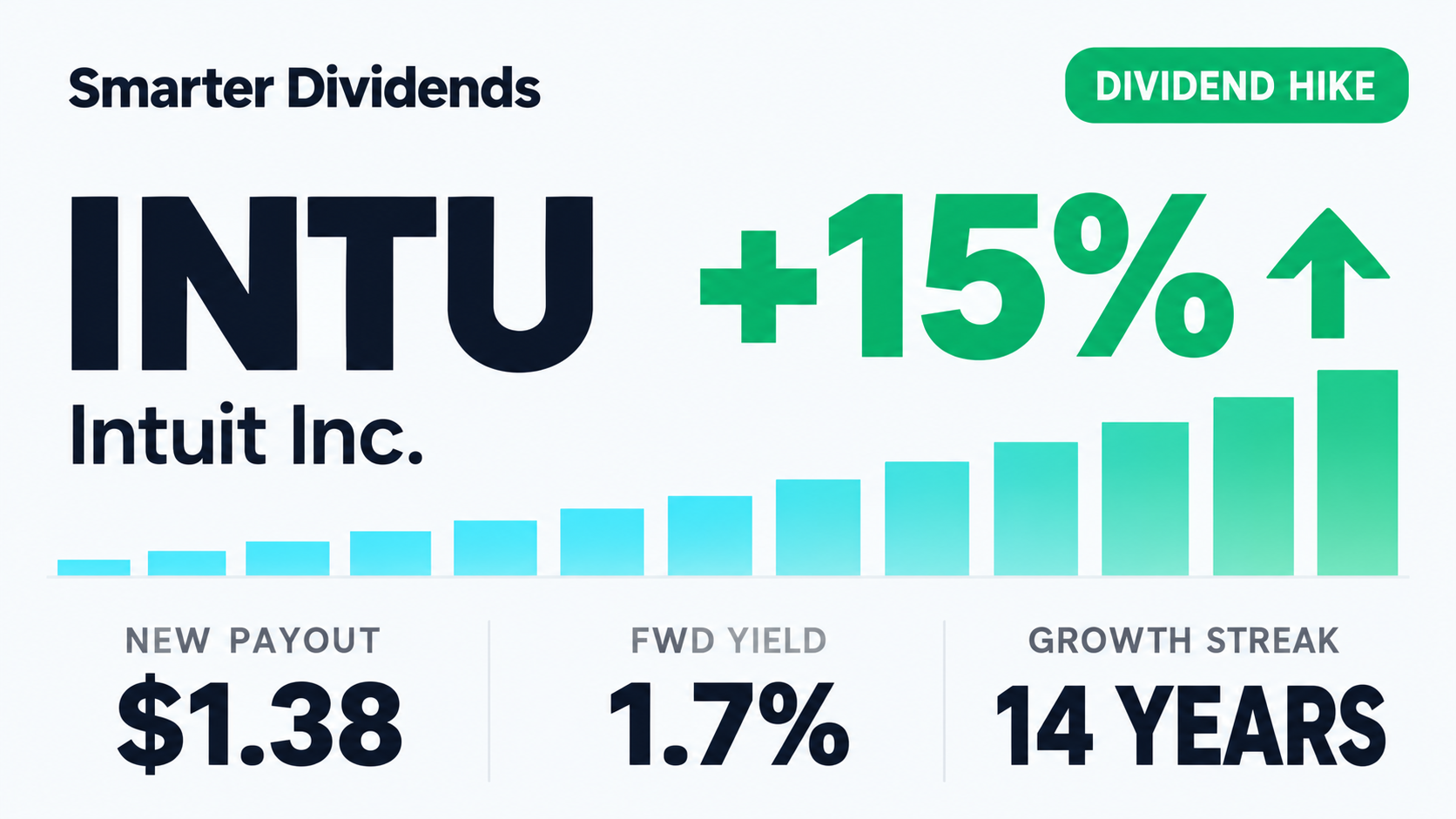
Intuit Raises Quarterly Dividend 15.0% to $1.38
Intuit’s new $1.38 quarterly dividend lifts its forward yield to 1.70%, backed by a 29% earnings payout ratio and a 14-year growth streak through 2026.

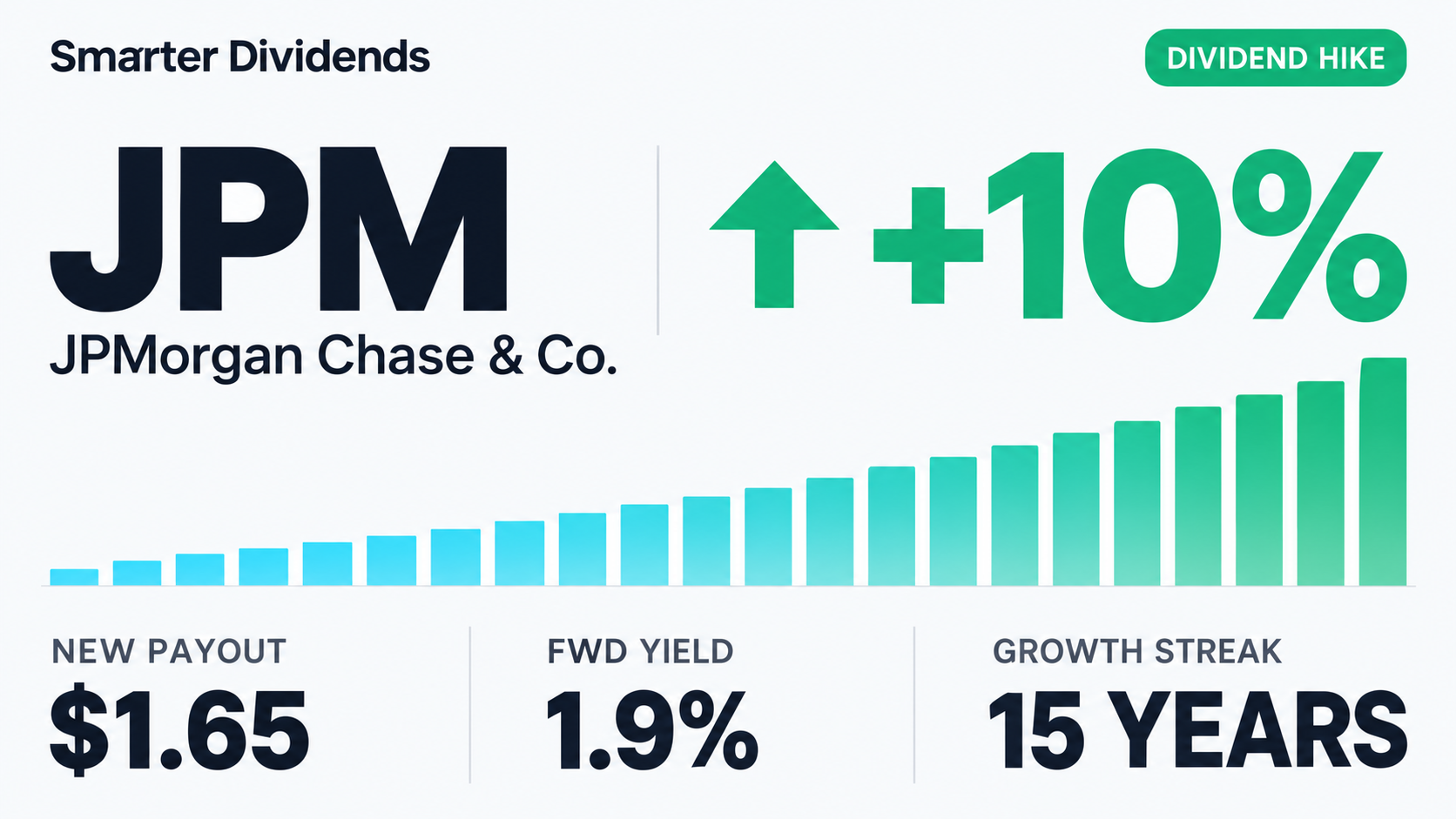
JPMorgan Raises Quarterly Dividend 10.0% to $1.65
JPMorgan’s quarterly dividend rises to $1.65, extending 15 years of growth, while a 26% earnings payout ratio supports an A safety grade.

Republic Services Raises Quarterly Dividend 7.2% to $0.67
Republic Services raised its quarterly dividend 7.2% to $0.67, extending a 22-year growth streak as its stronger 2026 cash-flow outlook supports coverage.