BNY Raises Quarterly Dividend 18.9% to $0.63
BNY raised its quarterly dividend 18.9% to $0.63 as stronger earnings and a minimum stress-capital buffer supported the 15th straight annual increase.
 BNY — The Bank of New York Mellon Corporation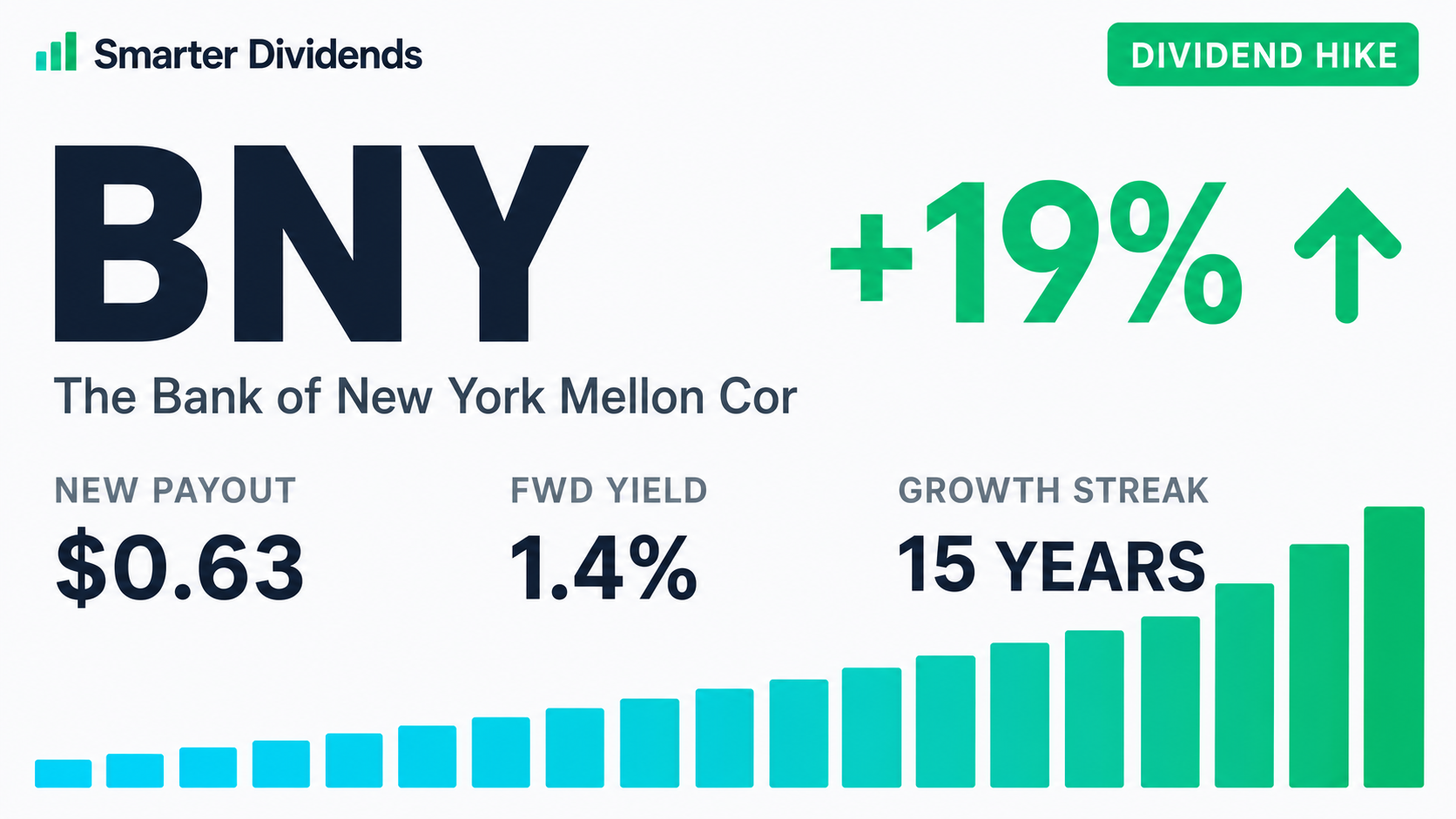
Key takeaways
- BNY raised its quarterly common dividend 18.9% to $0.63 from $0.53.
- The increase extends BNY’s dividend-growth streak to 15 years, while the last annual cut occurred in 2009.
- The dividend uses 25% of earnings, and SmarterDividends assigns it a C safety grade.
- BNY’s 1.48% forward yield trails the Financial Services sector median of 5.70%.
The Bank of New York Mellon Corporation raised its quarterly common dividend 18.9% to $0.63 from $0.53, extending its record of annual increases to 15 years. The shares traded ex-dividend on July 27, 2026.
Why the dividend changed
The increase followed BNY’s review of the Federal Reserve’s 2026 stress-test results. The bank said its Stress Capital Buffer has remained at the 2.5% floor since the framework began in 2020, giving the board a stable regulatory-capital backdrop for the higher payment. Chief Executive Robin Vince said the planned increase reflected the durability of BNY’s transformation, along with the resilience of its business model, balance-sheet strength and risk discipline.
The board converted that intention into a formal declaration. This was a conventional cash-dividend increase, not an adjustment caused by a stock split, merger, spin-off or special distribution. BNY also retained authorization to repurchase common shares, with the timing and amount dependent on its capital position and market conditions.
Second-quarter results supplied the operating context. Revenue rose 13% from a year earlier to $5.7 billion, while diluted earnings per share increased 27% to $2.45. Fee revenue grew 11% as net new business, higher market values and client activity offset pressure from the mix of asset-management flows. Net interest income advanced 20% on securities reinvestment and balance-sheet growth, partly offset by deposit-margin compression. Expenses rose 7%, leaving positive operating leverage and a 39.8% pretax operating margin. Those trends strengthened earnings capacity as the board approved the larger distribution.
Dividend track record
The annual record shows a persistent acceleration in cash returned per share. Full-year payments totaled $1.24 in 2020 and $1.30 in 2021, when the annual total rose 4.8%. The total then reached $1.42 in 2022, up 9.2%; $1.58 in 2023, up 11.3%; $1.78 in 2024, up 12.7%; and $2.00 in 2025, up 12.4%. The latest annual dividend figure is $2.22.
That progression supports a 15-year dividend-growth streak. The five-year annualized dividend-growth rate is 10.0%, showing that the recent step-up is part of a multiyear pattern rather than a one-off change. The last annual cut occurred in 2009, so the current run followed a reset during the global financial crisis.
The recent quarterly sequence also shows that BNY has used discrete increases rather than small changes every quarter. The regular payment was $0.47 on April 21, 2025, then $0.53 on July 25, 2025, October 27, 2025, January 23, 2026 and April 27, 2026. It moved to $0.63 for the July 27, 2026 ex-dividend date. That makes the latest increase larger than the preceding step in the regular rate.
Is the dividend covered?
The dividend consumes 25% of earnings. Put differently, most reported earnings remain after the common dividend, providing an earnings cushion for operations, regulatory capital and other capital returns.
SmarterDividends rates the dividend C, a borderline assessment. The grade means the low payout ratio alone does not place the distribution in the highest safety tier. For a regulated bank, coverage also depends on capital requirements, stress-test performance, balance-sheet risk and the durability of fee and interest income. BNY’s minimum Stress Capital Buffer and stronger second-quarter earnings are favorable current indicators, but the C grade calls for continued attention to those broader constraints.
Yield and valuation
At a share price of $149.32, BNY’s forward yield is 1.48%, well below the Financial Services sector median forward yield of 5.70%. The income rate is therefore modest relative to the sector even after the 18.9% increase. The stock’s one-year price return is 42.5%, which helps explain why the yield remains compressed despite faster dividend growth.
SmarterDividends estimates fair value at $269.55 and classifies the shares as undervalued, with 75% upside to that estimate. That valuation assessment is separate from dividend safety: the C grade addresses the resilience of the payment, while fair value compares the share price with an estimated underlying value.
What to watch
The next checkpoints are BNY’s third-quarter results and its next board dividend declaration. Investors can track whether fee revenue and net interest income continue to outpace expense growth, whether positive operating leverage persists, and how regulatory-capital ratios move as share repurchases continue under the existing authorization.
Capital rules are the other central item. BNY said current Stress Capital Buffers will remain in place until 2027, when new requirements may be calculated after the Federal Reserve incorporates feedback on its stress-testing models. Changes to that framework, together with BNY’s capital position and market conditions, will shape the room available for future distributions and repurchases.
BNY dividend data
From the SmarterDividends dataset, updated daily
- Forward yield
- 1.55%
- Payout ratio
- 25%
- Growth streak
- 15 yrs
- Safety grade
- C · 59/100
| Ex-dividend date | Amount | Change |
|---|---|---|
| Jul 27, 2026 | $0.6300 | +18.9% |
| Apr 27, 2026 | $0.5300 | +0.0% |
| Feb 6, 2026 | $0.0510 | special |
| Jan 23, 2026 | $0.5300 | +0.0% |
| Jan 20, 2026 | $0.0510 | special |
| Oct 27, 2025 | $0.5300 | +0.0% |
| Jul 25, 2025 | $0.5300 | +12.8% |
| Apr 21, 2025 | $0.4700 | +0.0% |
Full BNY dividend history →·Next ex-dividend date (Oct 26, 2026) →
Frequently asked questions
When was the latest BNY ex-dividend date?
The most recent BNY ex-dividend date was July 27, 2026. The associated quarterly rate was $0.63 per share.
How much is BNY’s new quarterly dividend?
BNY’s new quarterly dividend is $0.63 per share, up 18.9% from $0.53. The latest annual dividend figure is $2.22 per share.
Is BNY’s dividend covered by earnings?
The dividend payout ratio is 25%, leaving most earnings after the distribution. SmarterDividends rates the dividend C, a borderline safety assessment.
What is BNY’s dividend yield?
BNY’s forward yield is 1.48% at a share price of $149.32. That compares with a 5.70% median forward yield for the Financial Services sector.
How long has BNY increased its dividend?
BNY has increased its dividend for 15 consecutive years. Its five-year annualized dividend-growth rate is 10.0%, and its last annual cut occurred in 2009.
Sources
See BNY's full dividend profile
Yield, payout, safety score, history and the next ex-dividend date.
View BNYEvery dividend increases this month, with the data behind it: Dividend Increases, August 2026.
More dividend news

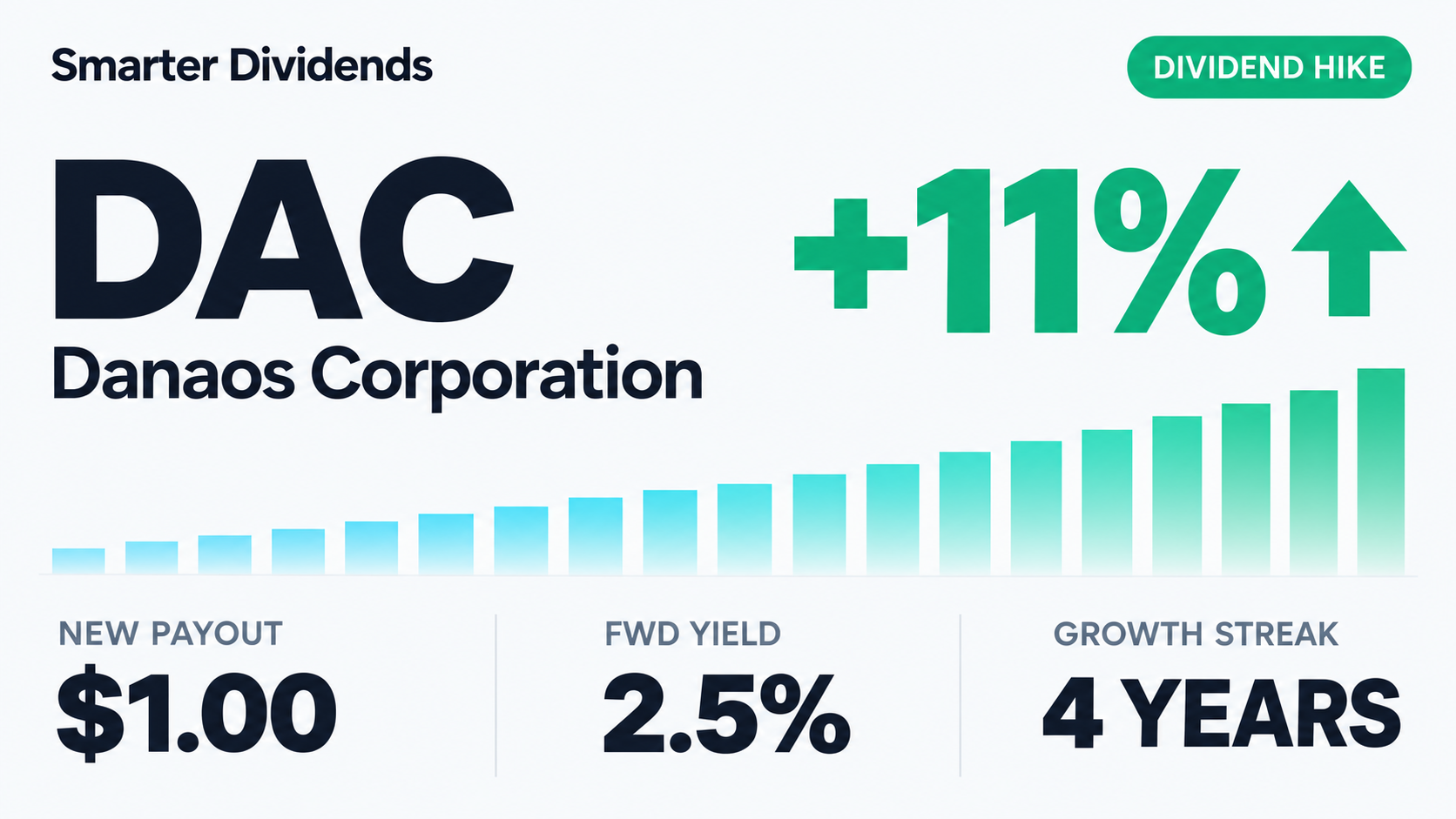
Danaos Raises Quarterly Dividend 11.1% to $1.00
Danaos lifted its quarterly dividend 11.1% to $1.00, payable October 22, as strong liquidity and contracted revenue support shareholder returns.

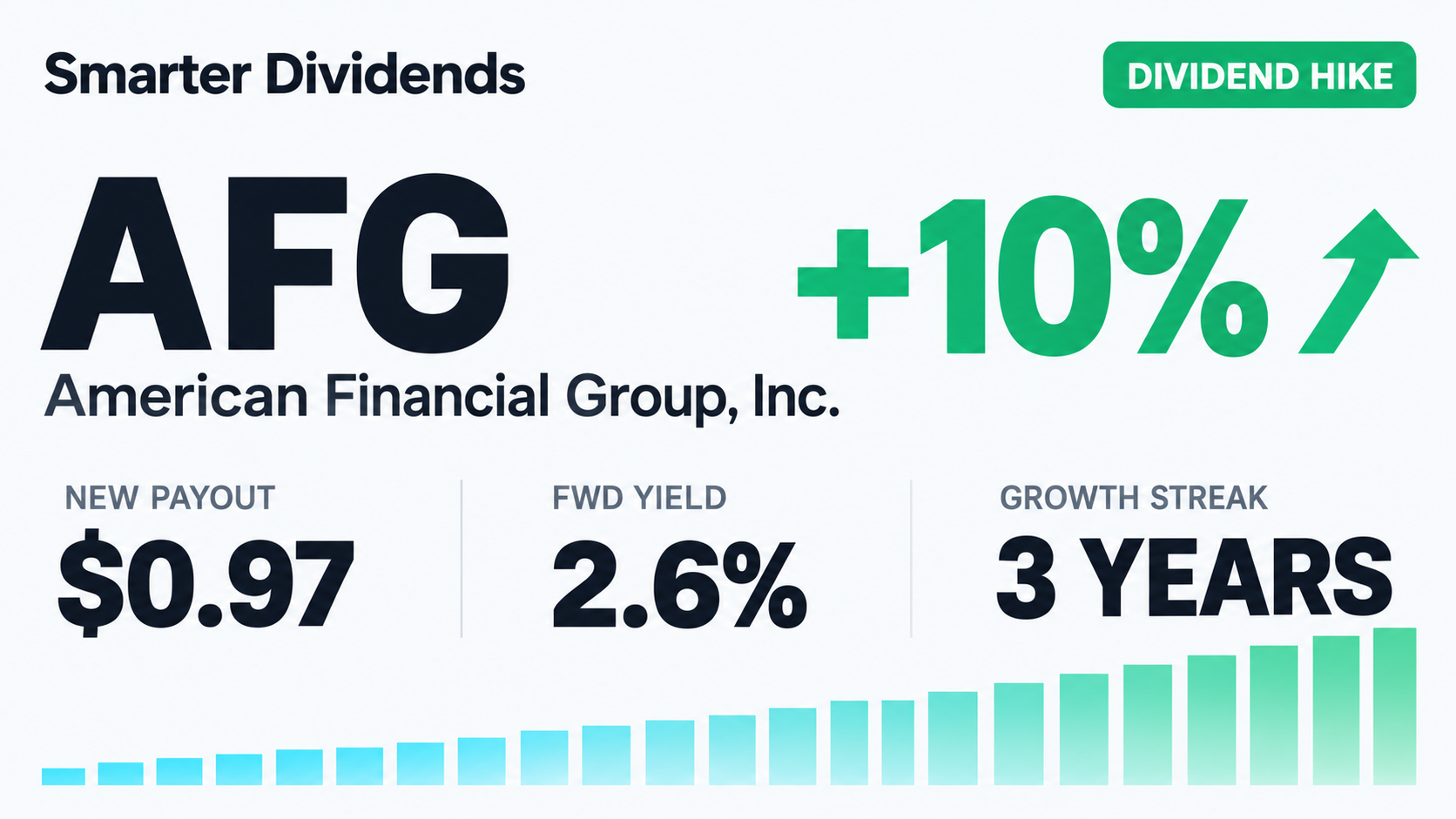
American Financial Group Raises Dividend 10.2% to $0.97
American Financial Group raised its quarterly dividend 10.2% to $0.97, with the higher payout due October 23, 2026, as underwriting profit improved.

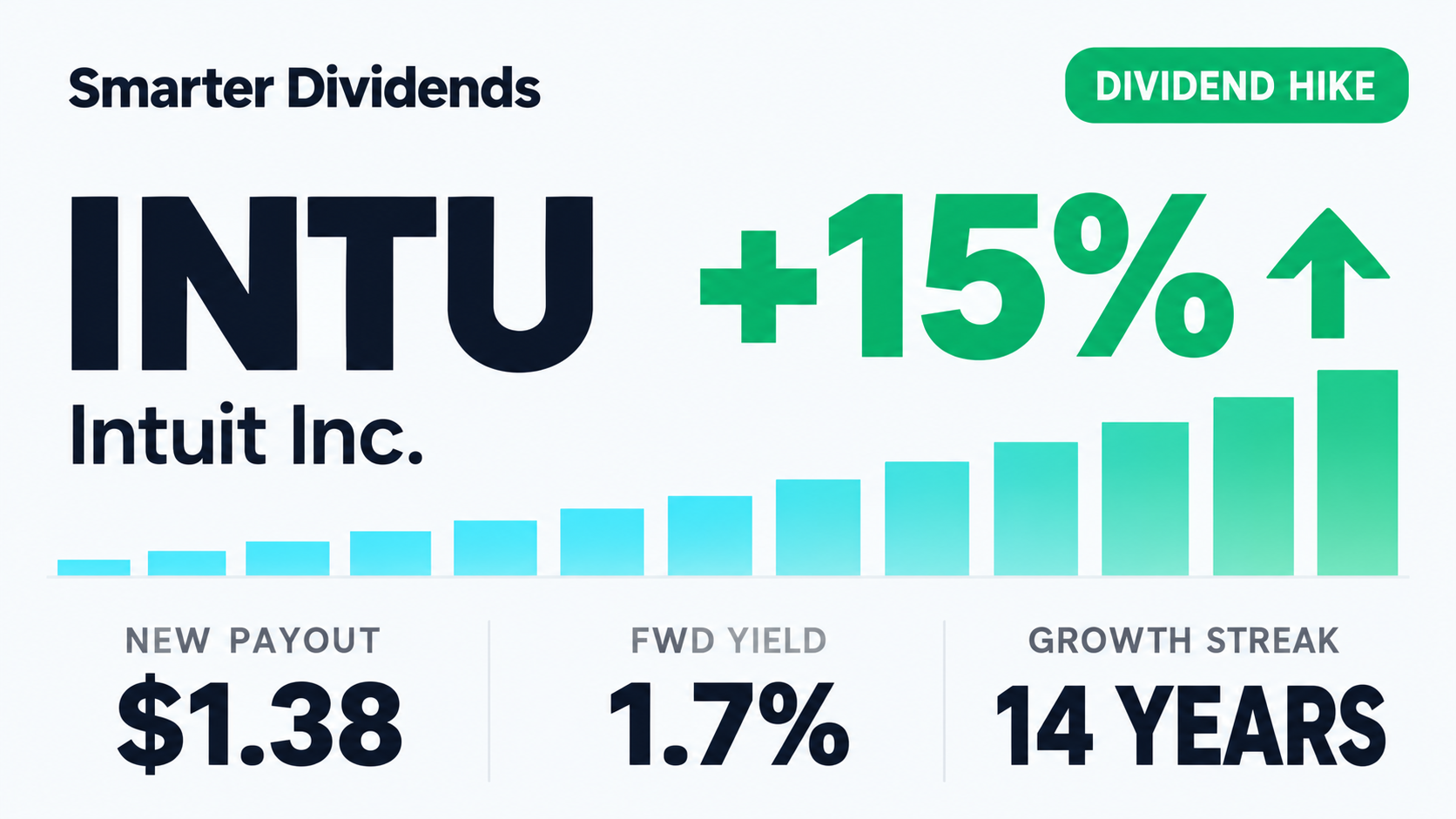
Intuit Raises Quarterly Dividend 15.0% to $1.38
Intuit’s new $1.38 quarterly dividend lifts its forward yield to 1.70%, backed by a 29% earnings payout ratio and a 14-year growth streak through 2026.

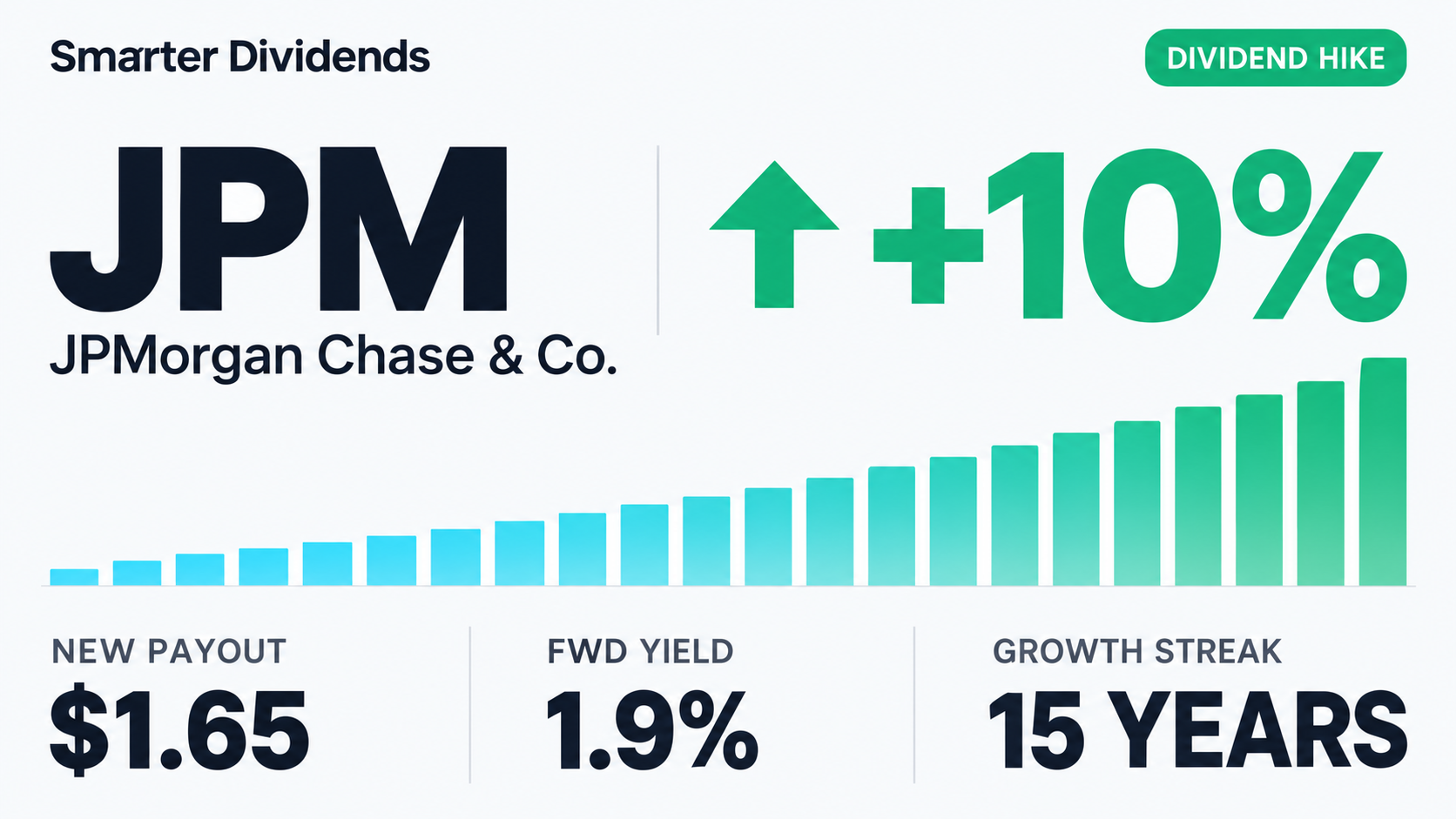
JPMorgan Raises Quarterly Dividend 10.0% to $1.65
JPMorgan’s quarterly dividend rises to $1.65, extending 15 years of growth, while a 26% earnings payout ratio supports an A safety grade.

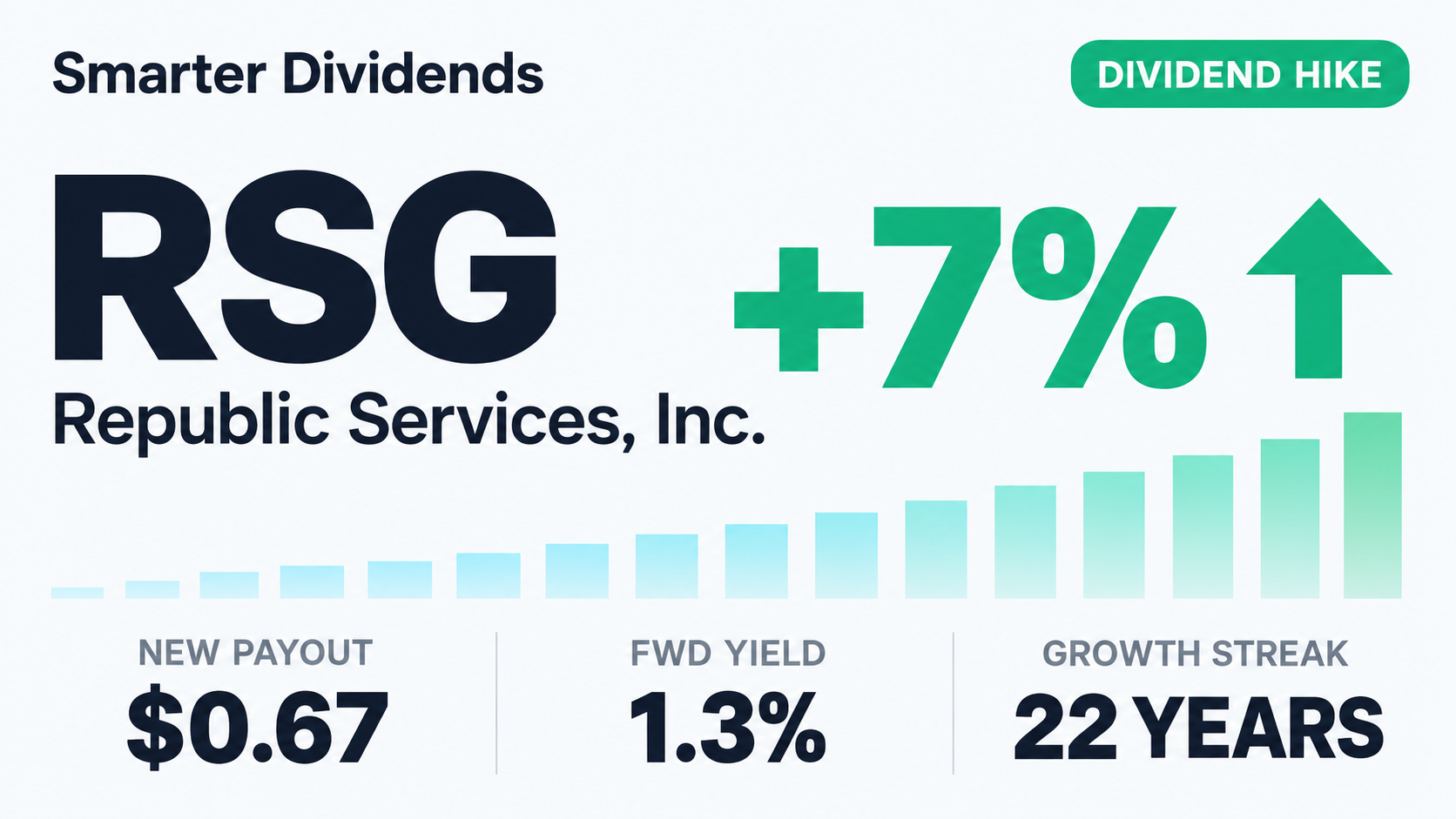
Republic Services Raises Quarterly Dividend 7.2% to $0.67
Republic Services raised its quarterly dividend 7.2% to $0.67, extending a 22-year growth streak as its stronger 2026 cash-flow outlook supports coverage.