Northrim BanCorp Raises Quarterly Dividend 6.25%
Northrim BanCorp increased its quarterly dividend to $0.17 per share, extending its growth streak to 16 consecutive years.
 NRIM — Northrim BanCorp, Inc.
Northrim BanCorp, Inc. increased its quarterly dividend to $0.17 per share from $0.16, a 6.25% rise. Shares traded ex-dividend on Sept. 10, 2026.
The increase extends the Alaska-based financial-services company’s dividend-growth streak to 16 consecutive years. Northrim previously reduced its dividend in 2009.
At the stated share price of $26.05, the supplied annual dividend amount of $0.65 per share represents a forward annual yield of 2.5%. The company has a dividend safety score of 89 out of 100 and an A safety grade.
Operating backdrop
The higher payment follows a stronger second quarter for Northrim. The company reported net income of $15.3 million, or $0.68 per diluted share, compared with $11.8 million, or $0.52 per diluted share, a year earlier. Northrim attributed the improvement mainly to higher net interest income. Net interest income rose 11% from the prior-year quarter, while lower deposit costs helped expand the company’s tax-equivalent net interest margin. Chief Executive Mike Huston said the results reflected the strength of Northrim’s relationship-driven banking model and disciplined execution. Northrim’s second-quarter release filed with the SEC
Northrim is the parent of Northrim Bank, an Alaska community bank with 21 branches serving communities that account for approximately 90% of the state’s population. Its other operations include specialty finance subsidiary Sallyport Commercial Finance and regional home lender Residential Mortgage. Northrim investor overview
The company also entered into a merger agreement in July with Oregon-based PBCO Financial Corporation. The planned transaction would ultimately combine People’s Bank of Commerce with Northrim Bank, subject to the agreement’s terms and closing conditions. SEC merger filing
What it means for income investors
The increase lifts the cash received per quarterly share while preserving Northrim’s 16-year record of consecutive annual dividend growth. The Sept. 10 ex-dividend date determines eligibility for the associated distribution; shares purchased on or after that date generally do not carry the payment. The safety grade indicates a comparatively strong dividend profile under the supplied methodology, though it does not guarantee future payments.
NRIM dividend data
From the SmarterDividends dataset, updated daily
- Forward yield
- 2.74%
- Payout ratio
- 21%
- Growth streak
- 16 yrs
- Safety grade
- A · 90/100
| Ex-dividend date | Amount | Change |
|---|---|---|
| Sep 10, 2026 | $0.1700 | +6.3% |
| Jun 11, 2026 | $0.1600 | +0.0% |
| Mar 5, 2026 | $0.1600 | +0.0% |
| Dec 18, 2025 | $0.1600 | +0.0% |
| Sep 4, 2025 | $0.1600 | +0.0% |
| Jun 5, 2025 | $0.1600 | +0.0% |
| Mar 6, 2025 | $0.1600 | +3.2% |
| Dec 19, 2024 | $0.1550 | +0.0% |
Sources
See NRIM's full dividend profile
Yield, payout, safety score, history and the next ex-dividend date.
View NRIMEvery dividend increases this month, with the data behind it: Dividend Increases, September 2026.
More dividend news

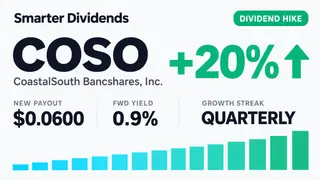
CoastalSouth Raises Quarterly Dividend 20.0% to $0.06
CoastalSouth’s quarterly payout rises to $0.06 as record earnings, loan growth and low charge-offs frame the regional bank’s dividend decision.
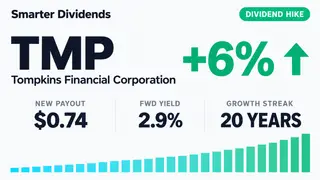
Tompkins Financial Raises Quarterly Dividend 5.7% to $0.74
Tompkins Financial lifted its quarterly dividend 5.7% to $0.74 as stronger earnings, wider margins and a firmer capital position supported the move.
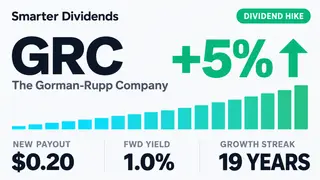
Gorman-Rupp Raises Quarterly Dividend 5.3% to $0.20
Gorman-Rupp lifted its quarterly dividend to $0.20, extending a 54-year growth record as stronger earnings and cash flow supported coverage.

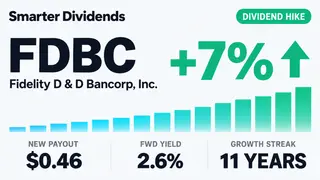
Fidelity D & D Bancorp Raises Dividend 7.0% to $0.46
FDBC raised its quarterly dividend to $0.46, extending an 11-year growth streak as stronger earnings and wider margins supported coverage of the payout.

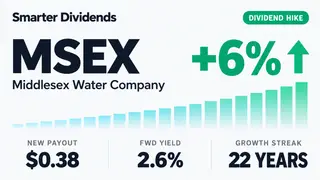
Middlesex Water Raises Dividend 5.6%, Extends 54-Year Streak
Middlesex Water lifted its quarterly dividend 5.6% to $0.38, extending a 54-year increase record as earnings coverage holds amid heavy investment.