TELUS (TU) Cuts Dividend 54.7% to $0.136, Ends 10-Year Streak
TELUS (TU) reset its quarterly dividend to $0.136 per share, a 54.7% cut aimed at reducing leverage after weaker results and lower 2026 guidance.
 TU — TELUS Corporation
Key takeaways
- TELUS cut its quarterly dividend 54.7% to $0.136 from $0.30.
- The new annual dividend is $0.54 per share, producing a 6.38% forward yield.
- The earnings payout ratio is 278%, while SmarterDividends assigns a C safety grade and a score of 67.
- The cut ends 10 consecutive years of dividend growth and is the first annual cut since 2015.
TELUS Corporation cut its quarterly dividend for NYSE-listed TU shares to $0.136 per share from $0.30, a reduction of 54.7%. The reduced payment traded ex-dividend on September 10, 2026, and lowers the annual dividend to $0.54 per share.
Why the dividend changed
TELUS described the action as a reset of its capital-allocation framework, with the cash retained from the lower payout directed toward debt reduction. The board acted as the company confronted weaker operating trends, higher planned spending and a longer path to its leverage target. This was a deliberate reduction, not an adjustment caused by a stock split, merger or spinoff. The company also withdrew its dividend-growth model and ended the discount attached to its dividend-reinvestment plan. TELUS’s dividend information page confirms the policy changes.
The decision accompanied a difficult second quarter. TELUS reported a net loss of $1.8 billion after recording a $2.1 billion noncash impairment related to TELUS Digital. Consolidated service revenue declined 1% to $4.4 billion, while adjusted EBITDA fell 2% to $1.8 billion. Free cash flow rose 2% to $545 million, but the improvement reflected lower tax and lease payments and was partly offset by higher interest expense and weaker adjusted EBITDA. TELUS’s second-quarter release details those results.
TELUS also reduced its full-year outlook. It now expects service revenue to range from flat to a decline of 2%, adjusted EBITDA to fall 2% to 4%, and free cash flow of approximately $1.8 billion. Planned capital expenditure increased to approximately $2.6 billion because of inflation, supply-chain pressure, customer-equipment costs and investment in sovereign AI data centers. The combination of lower operating expectations and higher spending reduced the cash available for dividends and debt repayment.
Leverage was 3.5 times net debt to adjusted EBITDA at quarter-end. TELUS moved the deadline for reaching approximately 3.0 times or lower to the end of 2028, citing competitive pricing and reduced subscriber demand amid slower population growth. The company’s SEC-filed quarterly discussion shows that interest coverage weakened and that dividends declared had exceeded cash from operations after capital expenditure over the preceding 12 months.
On the earnings call, Chief Executive Victor Dodig said lower immigration was reducing demand for some core products across Canadian carriers. Management also identified rapid automation in legacy digital services, imposed a moratorium on acquisitions and said proceeds from potential sales of noncore health and real-estate assets would go toward debt reduction. A fuller cost-efficiency plan is due with third-quarter results. The earnings-call transcript records those comments. Bloomberg reported that the shares fell to levels last seen in 2011 after the reset, underscoring how consequential the decision was for an income-oriented shareholder base. Bloomberg Law covered the market response.
Dividend track record
The cut ends 10 consecutive years of dividend growth and is the first annual cut since 2015. The preceding annual record was consistent: total payments increased from $0.89 in 2020 to $1.02 in 2021, up 13.6%; $1.04 in 2022, up 2.6%; $1.07 in 2023, up 2.9%; and $1.13 in 2024, up 5.8%. The pace varied, but the direction remained upward through 2024.
The 2025 line contains only two recorded payments totaling $0.58, down 48.5% from the prior-year total. Because that line includes two payments rather than four, it does not by itself establish a reduction in the quarterly rate. The later payment history shows the quarterly amount moving from $0.279 on March 11, 2025, to $0.304 on June 10, 2025, and $0.308 on March 11, 2026, before easing to $0.30 on June 10, 2026. The drop to $0.136 on September 10, 2026, is the clear break in that pattern.
TELUS had already paused its dividend-growth model before withdrawing it as part of the reset. The 10-year growth streak therefore ended through an explicit change in financial policy, rather than through an exchange-rate fluctuation or a corporate reorganization.
Is the dividend covered?
The earnings payout ratio is 278%. That means the historical dividend obligation was substantially larger than reported earnings, although the second-quarter impairment and net loss make an earnings-based ratio less representative of recurring cash generation than it would be in a normal period. The ratio nevertheless shows why maintaining the former distribution left little room for debt reduction or reinvestment.
SmarterDividends rates the dividend C, with a safety score of 67. A C denotes borderline safety: the reset lowers the recurring cash obligation, but the company still faces elevated leverage, higher interest costs and weaker operating guidance. Coverage will depend on whether free cash flow improves while capital spending and restructuring demands are controlled. The lower dividend provides more financial flexibility, but it does not erase the pressures that prompted the cut.
Yield and valuation
At a share price of $8.46, TU’s forward yield is 6.38%. That remains well above the Communication Services sector median of 3.78% and the Telecom Services industry median of 4.12%, even after the 54.7% reduction. The yield therefore remains elevated relative to both comparison groups, but it now comes with a shorter income stream and a recently broken growth record.
SmarterDividends estimates fair value at $8.27 and assigns a fair valuation verdict. The $8.46 share price represents 5% downside to that estimate. The 40.3% loss over the past year helps explain why the forward yield remains high despite the lower annual dividend.
How TELUS compares with peers
TELUS’s 6.38% forward yield is above each listed peer and the 4.12% industry median. Verizon Communications yields 6.08%, Comcast 5.85%, AT&T 4.39% and T-Mobile US 2.46%. The spread is narrower against Verizon and Comcast than it is against the industry median.
The coverage and growth comparisons are less favorable. TELUS has a 278% earnings payout ratio and a C safety grade. Verizon has a 73% payout ratio, an A grade and 21 consecutive years of growth. Comcast has a 42% ratio, an A grade and an 18-year streak. AT&T has a 37% ratio, a B grade and 0 consecutive years of growth, while T-Mobile has a 41% ratio, a C grade and 2 years of growth.
The comparison places TELUS at the high-yield end of the group but with the highest earnings payout ratio and a weaker safety grade than Verizon, AT&T and Comcast. Its 10-year growth record is longer than those of AT&T and T-Mobile, but the current cut distinguishes it from Verizon and Comcast, whose growth streaks remain intact.
What to watch
The next operational checkpoint is TELUS’s third-quarter report. Management has said it will provide more detail on its cost-transformation program, the next reduction in capital intensity and the broader capital-returns framework with those results. Progress against the revised service-revenue, adjusted-EBITDA and free-cash-flow guidance will show whether the reset is creating the intended financial room.
Asset sales are another concrete item. TELUS is marketing noncore TELUS Health-related assets and real estate, with proceeds designated for debt reduction. Investors can also track whether leverage begins moving from 3.5 times toward the company’s approximately 3.0-times-or-lower objective and whether the company maintains discipline after imposing its acquisition moratorium.
Payment details
The reduced quarterly payment for TU is $0.136 per share. The shares traded ex-dividend on September 10, 2026, which TELUS also identified as the record date for the declared distribution. The company’s declaration and payment history provide the record-date details.
The stated annual dividend is $0.54 per share. At that rate, 100 shares produce $54.00 in annual dividend income before taxes and any currency or brokerage effects. TELUS pays quarterly. To receive a declared payment, shares must be purchased before the ex-dividend date; a purchase on or after that date does not carry entitlement to that distribution.
TU dividend data
From the SmarterDividends dataset, updated daily
- Forward yield
- 6.55%
- Payout ratio
- 283%
- Growth streak
- 10 yrs
- Safety grade
- C · 56/100
| Ex-dividend date | Amount | Change |
|---|---|---|
| Sep 10, 2026 | $0.1360 | -54.7% |
| Jun 10, 2026 | $0.3000 | -2.6% |
| Mar 11, 2026 | $0.3080 | +1.3% |
| Jun 10, 2025 | $0.3040 | +9.0% |
| Mar 11, 2025 | $0.2790 | -1.8% |
| Dec 11, 2024 | $0.2840 | -1.0% |
| Sep 10, 2024 | $0.2870 | +1.4% |
| Jun 10, 2024 | $0.2830 | +1.4% |
Frequently asked questions
How much is the TU dividend now?
TELUS pays a quarterly dividend of $0.136 per TU share, down 54.7% from $0.30.
How much does TU pay in dividends per year?
The stated annual dividend is $0.54 per share. A holding of 100 shares produces $54.00 in annual income before taxes and other effects.
When did TU trade ex-dividend for the reduced payment?
TU traded ex-dividend on September 10, 2026. Shares had to be purchased before that date to carry entitlement to the distribution.
Is the TU dividend safe?
SmarterDividends rates the dividend C, with a safety score of 67. The borderline grade reflects a 278% earnings payout ratio and continuing pressure from leverage and weaker operating guidance.
How many years did TELUS grow its dividend?
TELUS recorded 10 consecutive years of dividend growth before this cut. Its last annual cut was in 2015.
What is TU’s dividend yield?
TU’s forward yield is 6.38% at a share price of $8.46. That compares with a 4.12% Telecom Services industry median and a 3.78% Communication Services sector median.
How does TU’s dividend compare with telecom peers?
TU’s 6.38% yield exceeds Verizon’s 6.08%, Comcast’s 5.85%, AT&T’s 4.39% and T-Mobile’s 2.46%. Its C safety grade is below Verizon’s and Comcast’s A grades and AT&T’s B, while matching T-Mobile’s C.
Why did TELUS cut its dividend?
TELUS reduced the dividend to retain cash for debt repayment after weaker results, reduced guidance and higher planned capital spending. The company is targeting lower leverage while pursuing cost reductions and asset sales.
Sources
See TU's full dividend profile
Yield, payout, safety score, history and the next ex-dividend date.
View TUEvery dividend cuts this month, with the data behind it: Dividend Cuts, September 2026.
More dividend news

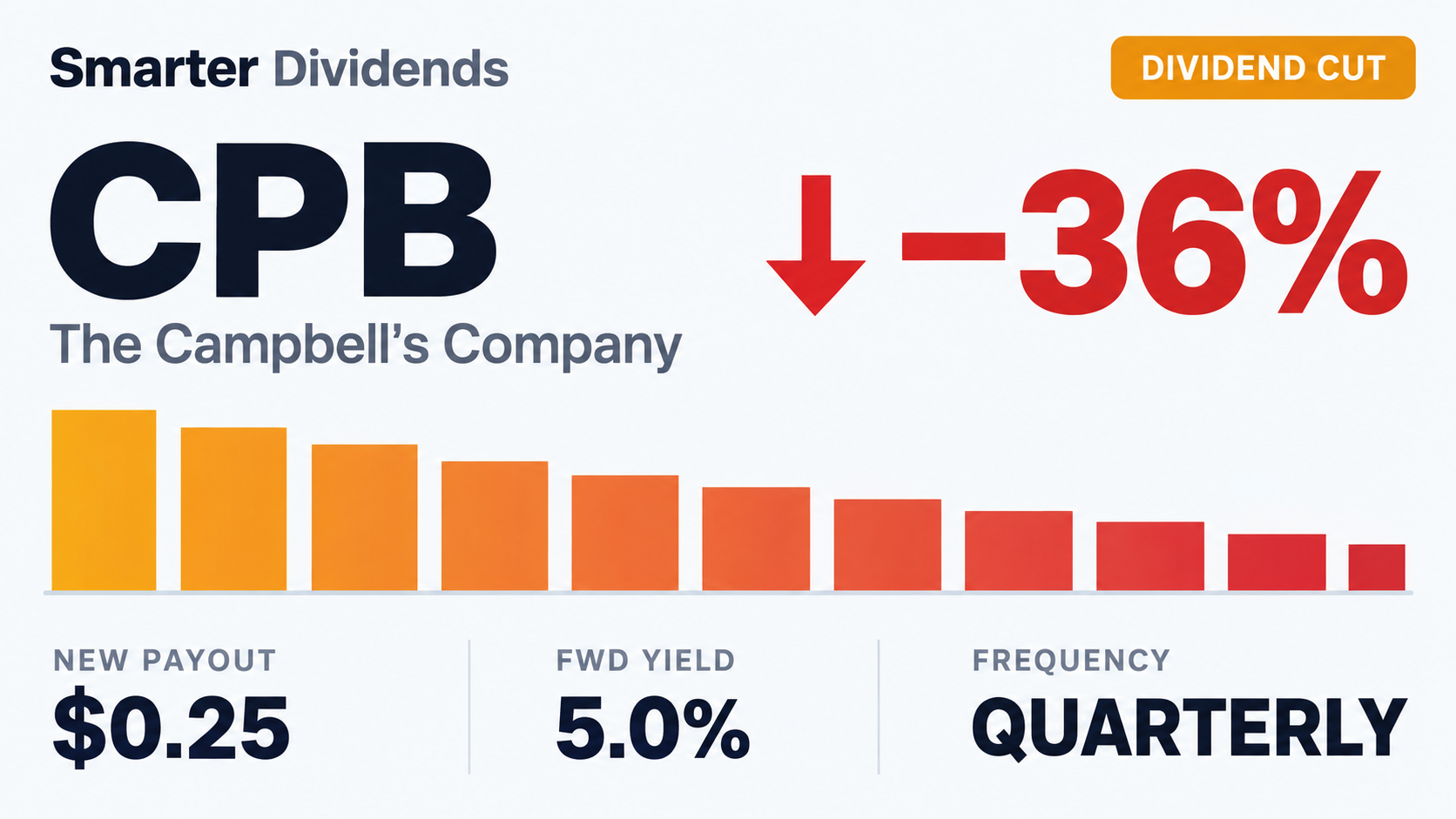
Campbell’s Cuts Quarterly Dividend 35.9% to $0.25
Campbell’s cuts its quarterly dividend 35.9% to $0.25, prioritizing debt reduction after weaker fiscal 2026 sales, earnings and cash generation.

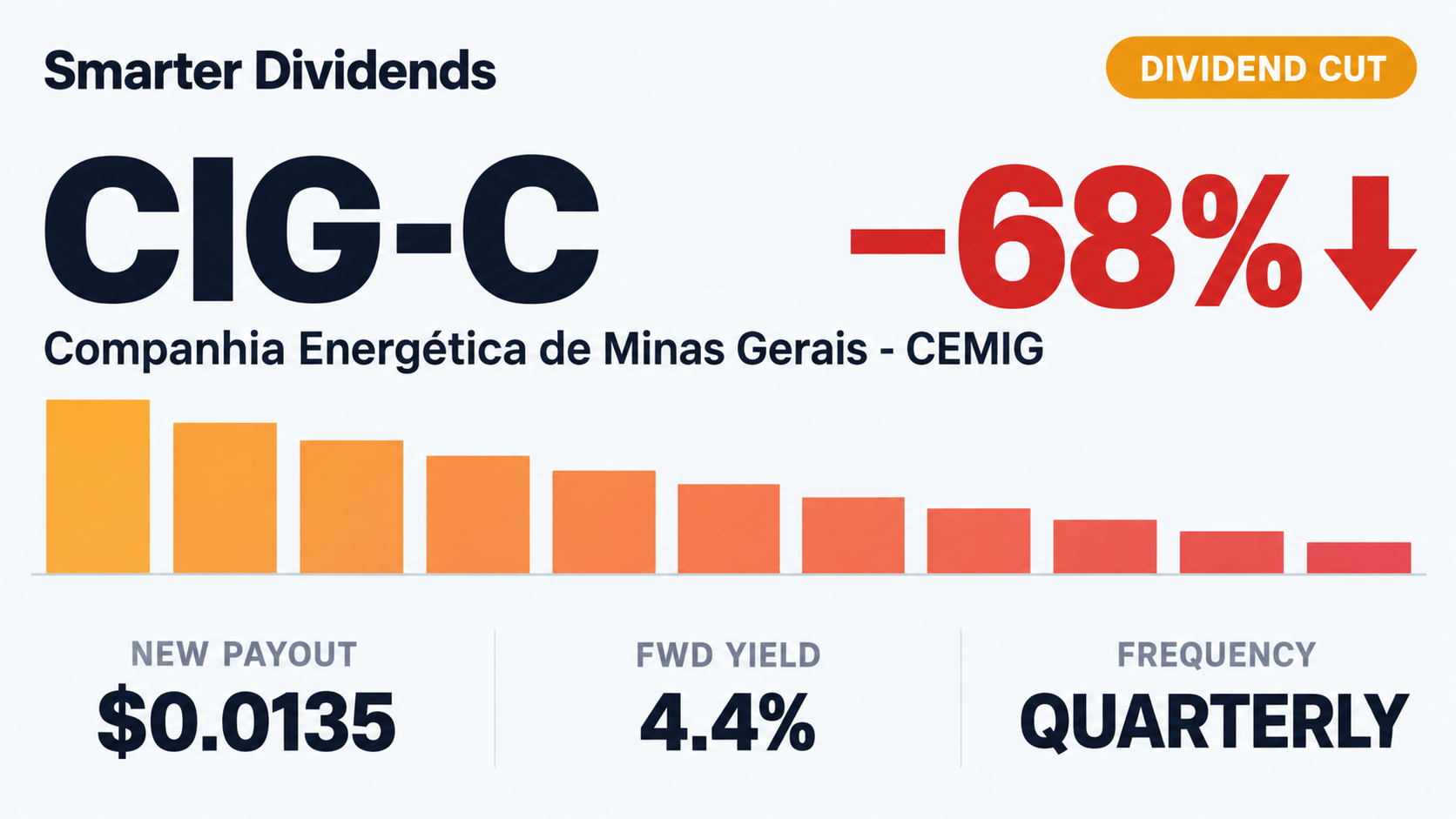
CEMIG Cuts CIG-C Dividend 68.4% to $0.0135
CEMIG’s CIG-C payout falls to $0.0135 a share, while a 79% earnings payout ratio and variable payment history frame the cut’s full significance.

Fidus Investment Cuts Quarterly Payout 19.35% to $0.50
Fidus Investment reduced its quarterly payout from $0.62 to $0.50, lowering the supplemental portion while leaving its base dividend intact.

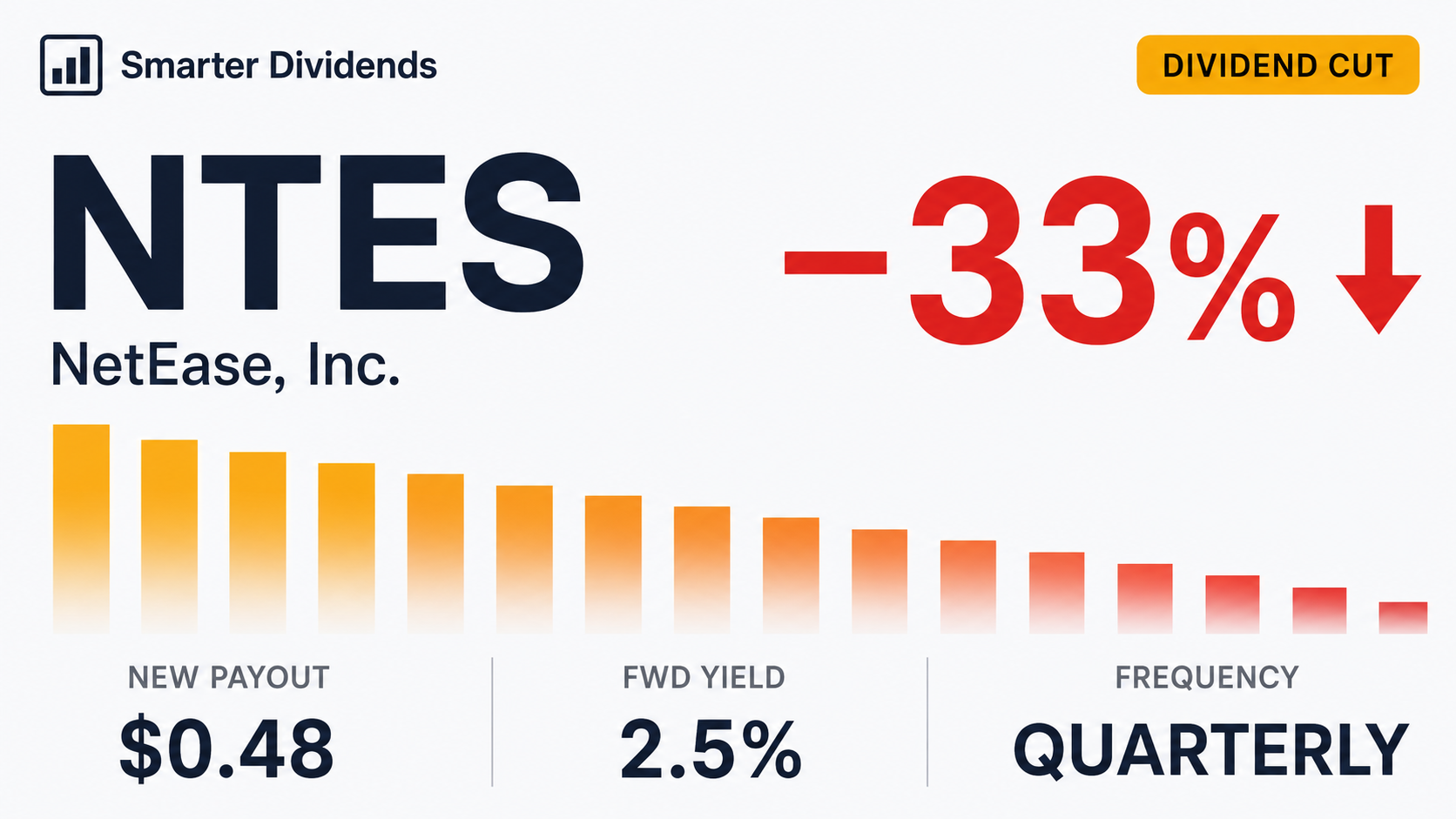
NetEase Cuts Quarterly Dividend 33.3% to $0.48
NetEase cut its quarterly dividend 33.3% to $0.48 as earnings and operating cash flow fell despite stronger revenue and gross profit in the second quarter.

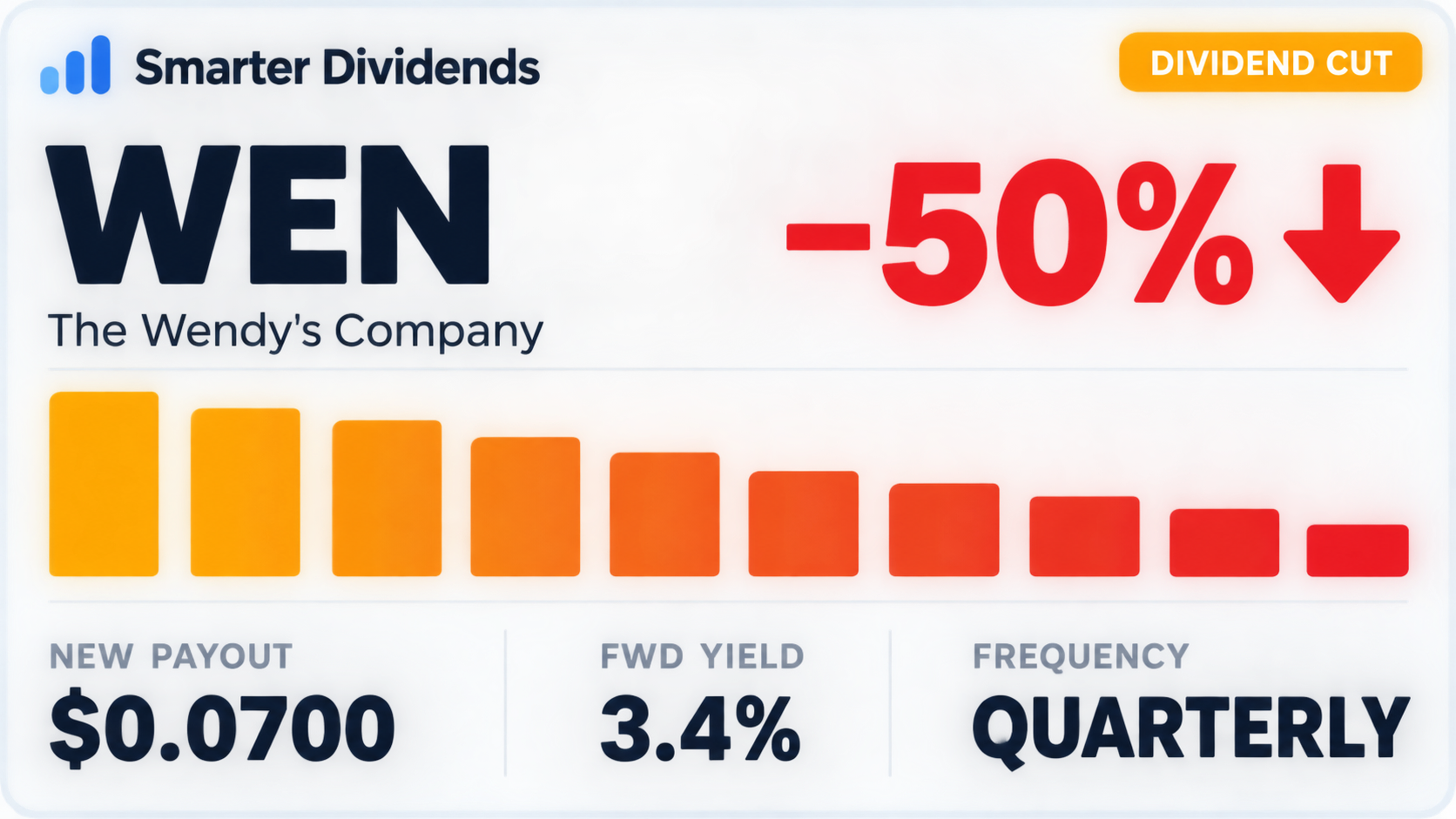
Wendy’s Cuts Quarterly Dividend in Half to $0.07
Wendy’s reduced its quarterly dividend by 50% as the restaurant chain preserves capital for a business turnaround.