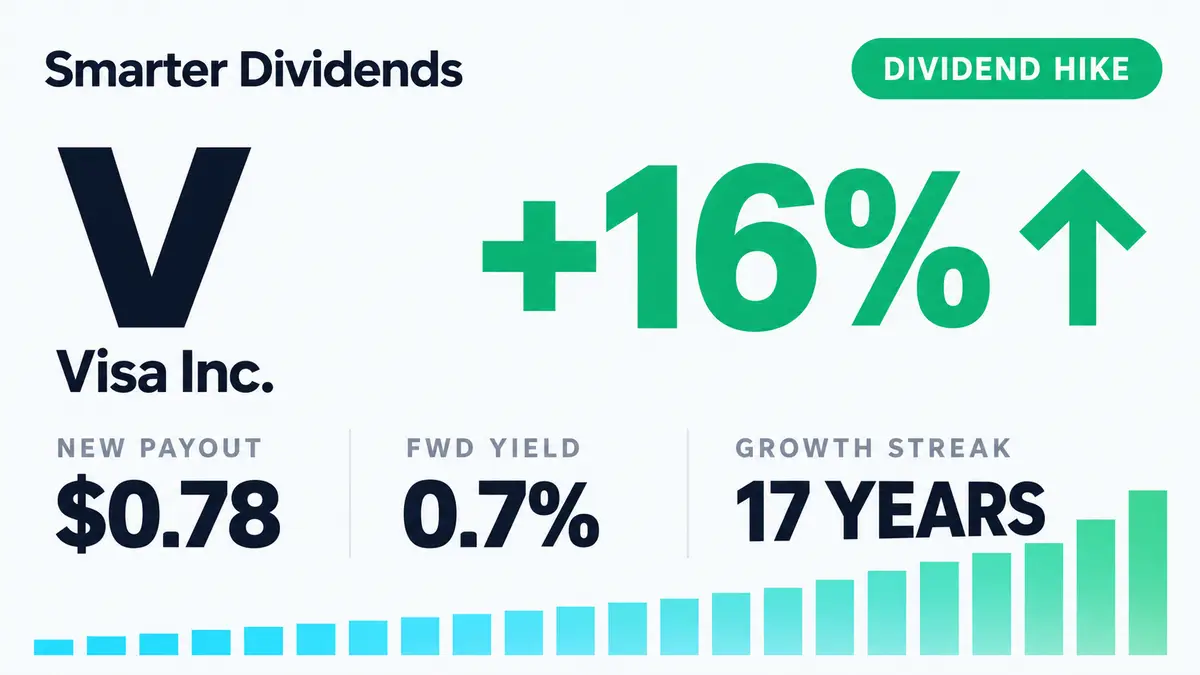
Visa Raises Quarterly Dividend 16.4% to $0.78
Visa lifted its quarterly dividend to $0.78, extending a 17-year growth streak, with a 22% earnings payout ratio and a 0.67% forward yield for V.
 V — Visa Inc.
Key takeaways
- Visa raised its quarterly dividend 16.4%, from $0.67 to $0.78 per share.
- The increase extends Visa’s dividend-growth streak to 17 consecutive years after 14.5% annual growth over five years.
- The dividend uses 22% of earnings and carries an A safety grade with a score of 93.
- Visa’s 0.67% forward yield remains below the Financial Services sector median of 5.83%.
Visa raised its quarterly cash dividend to $0.78 from $0.67, a 16.4% increase. The stock will trade ex-dividend on November 10, 2026, and the payment is scheduled for December 1, 2026.
Why the dividend changed
Visa did not attribute the increase to a split, merger, spinoff or special distribution. Its dividend history records a regular quarterly board declaration, continuing the pattern of resetting the payment and maintaining that rate for subsequent quarters. The decision therefore represents an increase in Visa’s recurring cash distribution rather than a one-time capital return. Visa’s dividend record confirms the new declaration and payment schedule.
The increase is consistent with management’s established capital-allocation framework. At its investor day, Visa placed investment in growth first, followed by regular dividends, excess-cash returns through share repurchases and management of the capital structure to preserve strong credit ratings. Management also linked consistent capital returns to the company’s cash-generation model. Visa’s investor-day presentation outlines that framework.
The board acted as Visa released its fiscal fourth-quarter and full-year 2026 results. The company’s public results notice directs investors to the detailed earnings release and conference-call materials but does not provide a separate explanation for the dividend increase. The timing connects the reset to the annual review of earnings and capital needs, while the dividend announcement itself is not operating guidance. Visa’s fiscal 2026 results notice provides the results materials.
Visa is also continuing to deploy cash into its business. The company agreed to acquire fraud-intelligence provider BioCatch for $2.4 billion in cash, subject to regulatory approvals and other closing conditions. Visa expects the transaction to close by the end of its fiscal second quarter of 2027. The acquisition is not presented as a reason for the dividend increase, but it shows that the higher distribution sits alongside continued spending on security and value-added services. Visa’s BioCatch announcement describes the transaction and closing conditions.
Dividend track record
Visa’s recent payments show a clear annual step-up pattern. Four consecutive payments of $0.59, beginning with the November 12, 2024, ex-dividend date, were followed by four payments of $0.67 from November 12, 2025, through August 11, 2026. The new $0.78 rate begins with the November 10, 2026, ex-dividend date.
Full-year totals reinforce that pattern. Dividends reached $1.87 per share in 2023, an increase of 18.7%; $2.15 in 2024, an increase of 15.0%; and $2.44 in 2025, an increase of 13.5%. Visa has increased its dividend for 17 consecutive years, and its five-year dividend-growth rate is 14.5% annual growth. The record combines a relatively low starting yield with sustained double-digit payment growth.
The annual dividend per share is $2.68, equivalent to $268.00 of annual income for every 100 shares. That figure describes the current annual dividend amount, while $0.78 is the newly declared quarterly rate.
Is the dividend covered?
Visa’s dividend consumes 22% of earnings. That leaves most reported earnings available for reinvestment, acquisitions, repurchases and balance-sheet needs, providing a substantial earnings cushion around the distribution.
SmarterDividends rates the dividend A, with a safety score of 93. An A denotes a very safe dividend, corresponding to a score of 80-100. The low earnings payout ratio and established growth record support that assessment, although the grade does not eliminate operating, regulatory or capital-allocation risk.
Yield and valuation
Visa’s forward yield is 0.67%, well below the Financial Services sector median forward yield of 5.83%. The gap means the dividend remains a modest source of current income despite the 16.4% increase. Visa’s income profile is defined more by payment growth than by a high initial yield.
At a share price of $410.54, Visa has a market value of $767.3 billion and has recorded a 22.0% gain over one year. SmarterDividends’ fair-value estimate is $306.97, producing an overvalued verdict and 25% downside to fair value. That comparison is a valuation assessment, not a forecast of the share price or the dividend.
What to watch
The immediate dates are November 10, 2026, when the shares trade ex-dividend, and December 1, 2026, when the payment is due. Investors purchasing on or after the ex-dividend date will not qualify for that payment.
Subsequent quarterly declarations will show whether Visa maintains the $0.78 rate through the next annual review, as it did with the preceding $0.59 and $0.67 payments. The next earnings materials will also provide updated evidence on earnings coverage and management’s balance among dividends, repurchases and investment.
The BioCatch transaction is another concrete item to monitor. Its regulatory progress, closing timetable and integration into Visa’s value-added services will affect a competing use of cash as the company maintains its regular capital-return program.
V dividend data
From the SmarterDividends dataset, updated daily
- Forward yield
- 0.67%
- Payout ratio
- 22%
- Growth streak
- 17 yrs
- Safety grade
- A · 93/100
| Ex-dividend date | Amount | Change |
|---|---|---|
| Aug 11, 2026 | $0.6700 | +0.0% |
| May 12, 2026 | $0.6700 | +0.0% |
| Feb 10, 2026 | $0.6700 | +0.0% |
| Nov 12, 2025 | $0.6700 | +13.6% |
| Aug 12, 2025 | $0.5900 | +0.0% |
| May 13, 2025 | $0.5900 | +0.0% |
| Feb 11, 2025 | $0.5900 | +0.0% |
| Nov 12, 2024 | $0.5900 | +13.5% |
Full V dividend history →·Next ex-dividend date (Nov 10, 2026) →
Frequently asked questions
When is Visa’s next ex-dividend date?
Visa’s next ex-dividend date is November 10, 2026. Investors purchasing shares on or after that date will not receive the upcoming payment.
When will Visa pay its next dividend?
Visa’s next quarterly dividend is scheduled for payment on December 1, 2026.
How much is Visa’s new quarterly dividend?
Visa’s new quarterly dividend is $0.78 per share, up from $0.67. The increase is 16.4%.
Is Visa’s dividend safe?
SmarterDividends rates Visa’s dividend A with a safety score of 93, meaning very safe within the 80-100 range. The dividend’s earnings payout ratio is 22%.
How much annual dividend income do 100 Visa shares produce?
The annual dividend per share is $2.68, producing $268.00 of annual income for every 100 shares.
Sources
See V's full dividend profile
Yield, payout, safety score, history and the next ex-dividend date.
View VEvery dividend increases this month, with the data behind it: Dividend Increases, October 2026.
More dividend news

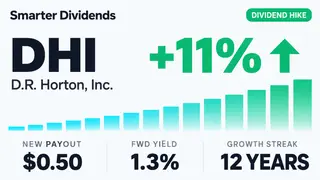
D.R. Horton Raises Quarterly Dividend 11.1% to $0.50
D.R. Horton raised its quarterly payout 11.1% to $0.50 as cash generation supports a longer growth streak despite weaker housing demand and profit pressure.

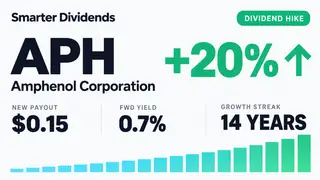
Amphenol Raises Quarterly Dividend 20.0% to $0.15
Amphenol raised its quarterly dividend 20.0% to $0.15, backed by record third-quarter results, strong cash flow and broad electronic-components demand.

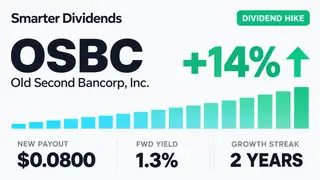
Old Second Bancorp Raises Quarterly Dividend 14.3% to $0.08
Old Second lifts its quarterly dividend 14.3% to $0.08, with a 15% earnings payout ratio and an A safety grade after stronger quarterly results.
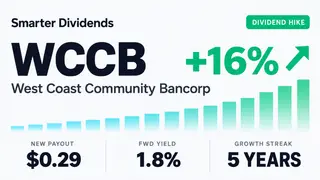
West Coast Community Bancorp Raises Dividend 16.0% to $0.29
West Coast Community Bancorp raised its quarterly dividend 16.0% to $0.29, extending a 5-year growth streak with an A safety grade and 1.83% yield.

Metropolitan Bank Raises Quarterly Dividend 14.3% to $0.40
Metropolitan Bank lifts its quarterly dividend to $0.40 as stronger earnings, wider margins and solid capital support the latest payout increase.